
Meal Planning for Real Families: Turning a Weekly Habit Into Consistent Savings

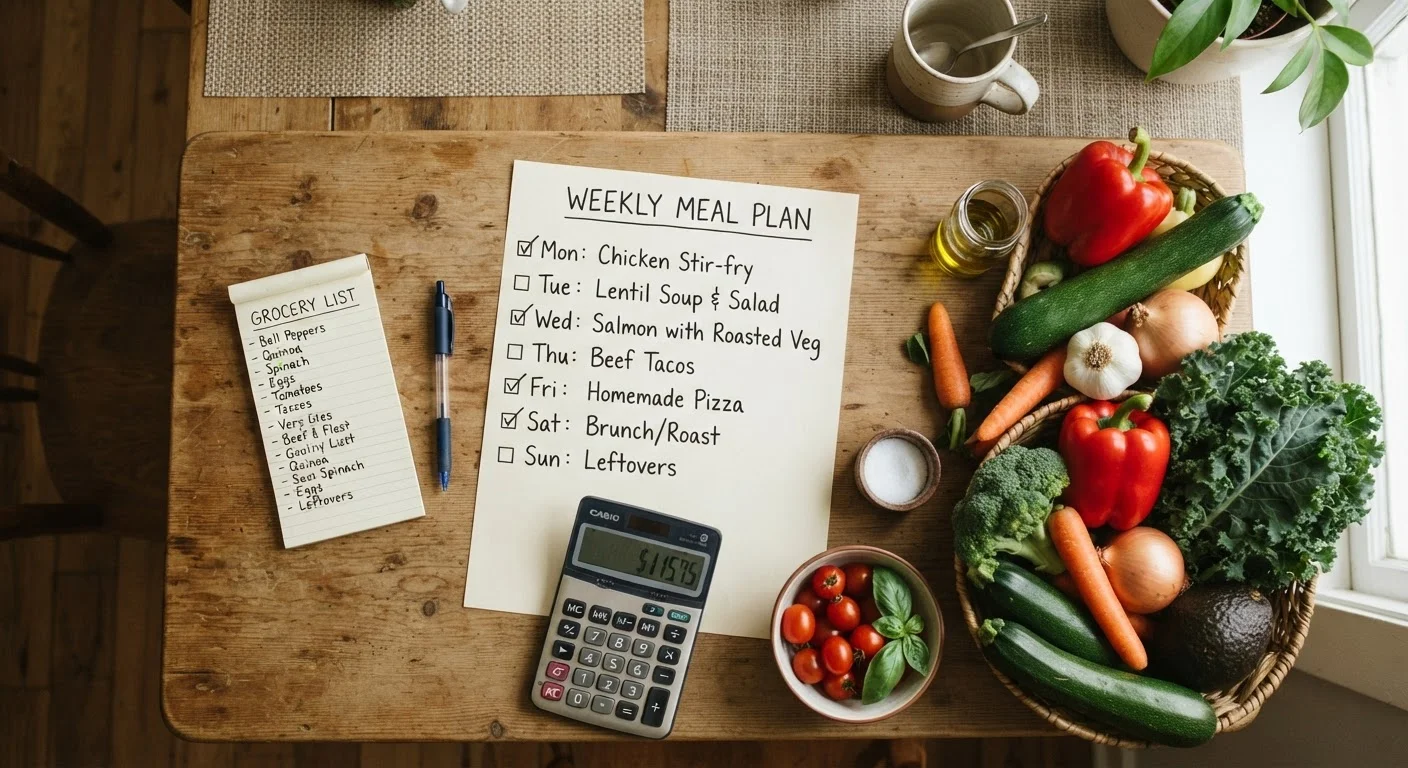
Photo: connectedsearches.com editorial
Key Takeaways
- Meal planning directly cuts food waste and impulse spending, two of the biggest drains on household grocery budgets.
- A functional weekly plan takes 20 to 30 minutes and does not require elaborate recipes or cooking skills.
- Flexible ingredient overlap across multiple meals multiplies the value of every item you buy.
- Batch cooking on one day reduces both cooking time and the temptation to order takeout.
- Consistent planning, not perfection, produces lasting savings over months and years.
Why meal planning reduces grocery bills
Two costs quietly inflate most household grocery budgets: food that spoils before it is used, and food purchased without a plan because a meal needs filling at the last minute. Meal planning addresses both at once by giving every item on your shopping list a purpose before you buy it.
When you know Tuesday is pasta night and Thursday uses the same canned tomatoes in a soup, you stop buying duplicate pantry items and stop throwing away produce that sat too long. That overlap is where the savings actually live. See our guide to using soup as a budget strategy for a detailed look at how a single pot can stretch inexpensive ingredients across multiple meals.
Impulse spending at the store is a separate problem. Shoppers who arrive without a list are far more likely to buy items they already have at home or add items that do not fit any specific meal. A written plan converts the grocery store from a browsing environment into a targeted errand.
Meal plan
A written list of the specific meals a household intends to cook over the coming week, used to guide grocery shopping and reduce waste.
Ingredient overlap
Using the same ingredient across two or more planned meals in the week so that one purchase does multiple jobs and less food goes to waste.
Batch cooking
Preparing larger quantities of food in one cooking session, typically on a weekend day, so that weeknight meals require minimal additional effort.
Pantry staples
Shelf-stable, low-cost ingredients such as dried beans, canned tomatoes, and grains that form the base of many inexpensive meals and do not spoil quickly.
Variable expense
A household cost that changes from month to month and can be adjusted through planning and behavior, with groceries being one of the most controllable examples.
Building your first weekly meal plan
Start with dinners only. Write down five to six meals for the week, then check what you already have in the pantry and freezer before building your shopping list. This single step prevents duplicate purchases, which is one of the most common sources of invisible grocery waste.
Choose two or three meals that share at least one ingredient. A roasted chicken on Monday can become chicken tacos on Wednesday and chicken soup on Friday. That structure means one purchase does multiple jobs. Our breakdown of one chicken across five dinners shows exactly how this works in practice.
Keep a rotation of eight to ten meals your household already likes. Novelty is not the goal at first. Reliability is. Once planning feels automatic, adding new meals is easy because the system is already in place.
For families working with a specific weekly dollar target, a practical framework for feeding four under $100 a week pairs well with this planning approach.
Shopping smarter with your plan
A complete plan makes your shopping list specific and finite. Instead of buying a vague "some chicken," you know you need two pounds of thighs for Monday's recipe and nothing more. Specificity reduces overbuying.
Before finalizing your list, check store sales for the week. If a protein or vegetable you planned to use is on sale, great. If a different vegetable is marked down significantly, consider swapping it into one flexible meal slot. This is the logic behind flexible list shopping: you keep the structure of your plan while adjusting to in-store pricing.
Seasonal produce generally costs less than out-of-season imports. Building meal plan slots around what is currently in season, rather than fixed recipes, can lower produce costs meaningfully over a full year. Seasonal produce calendars explain how growing cycles affect what you pay at the register.
Run through a quick pre-trip checklist before leaving the house. A structured pre-store routine takes five minutes and prevents the duplicate purchases and forgotten items that add up over weeks.
Reducing waste and stretching ingredients
Food waste is a direct dollar loss. Produce that goes bad, leftovers that get forgotten, and half-used cans that sit until they expire all represent money already spent with no return. Meal planning reduces waste by assigning every perishable item a specific use before it goes into your cart.
The freezer is the most underused tool in this process. Proteins purchased in larger quantities can be portioned and frozen immediately, then pulled for a planned meal later in the week or next week. Using the freezer strategically covers which foods freeze well and how to organize them so nothing gets lost.
Shelf-stable pantry staples such as dried beans, lentils, canned tomatoes, and whole grains give you a reliable base layer for meals without adding to weekly perishable spend. When fresh produce costs more or supply is limited, these staples carry the meal.
Batch cooking one afternoon a week, typically Sunday, eliminates the "what do I cook tonight" problem that leads to takeout. A beginner's guide to Sunday batch cooking walks through choosing recipes, storing safely, and reheating without losing quality.
Making the habit stick week after week
Meal planning fails most often not because it is hard, but because it starts too ambitiously. Planning seven elaborate dinners in week one, burning out by Thursday, and abandoning the plan entirely is a predictable pattern. The reasons families abandon new financial habits early apply directly here: the system needs to fit real life, not an idealized version of it.
Set a recurring 20-minute window each week, typically Saturday or Sunday morning, to plan the coming week. Treat it as a standing appointment. Over four to six weeks, it stops feeling like a task and becomes a background routine.
Track your grocery receipts for two months alongside your meal plan. Comparing what you planned to spend against what you actually spent shows which categories drift and why. This connects meal planning to the broader habit of monthly budget reviews, where food spending is one of the most adjustable variable expenses a household controls.
One practical guard against common frugal backfires: avoid buying in bulk without a clear plan for using the quantity before it spoils. The real trade-offs of bulk buying covers when larger purchases save money and when they quietly inflate costs instead.
Frequently Asked Questions
The content provided on our blog site traverses numerous categories, offering readers valuable and practical information. Readers can use the editorial team’s research and data to gain more insights into their topics of interest. However, they are requested not to treat the articles as conclusive. The website team cannot be held responsible for differences in data or inaccuracies found across other platforms. Please also note that the site might also miss out on various schemes and offers available that the readers may find more beneficial than the ones we cover.