
Buying in Bulk: The Full Picture of When It Saves Money and When It Does Not

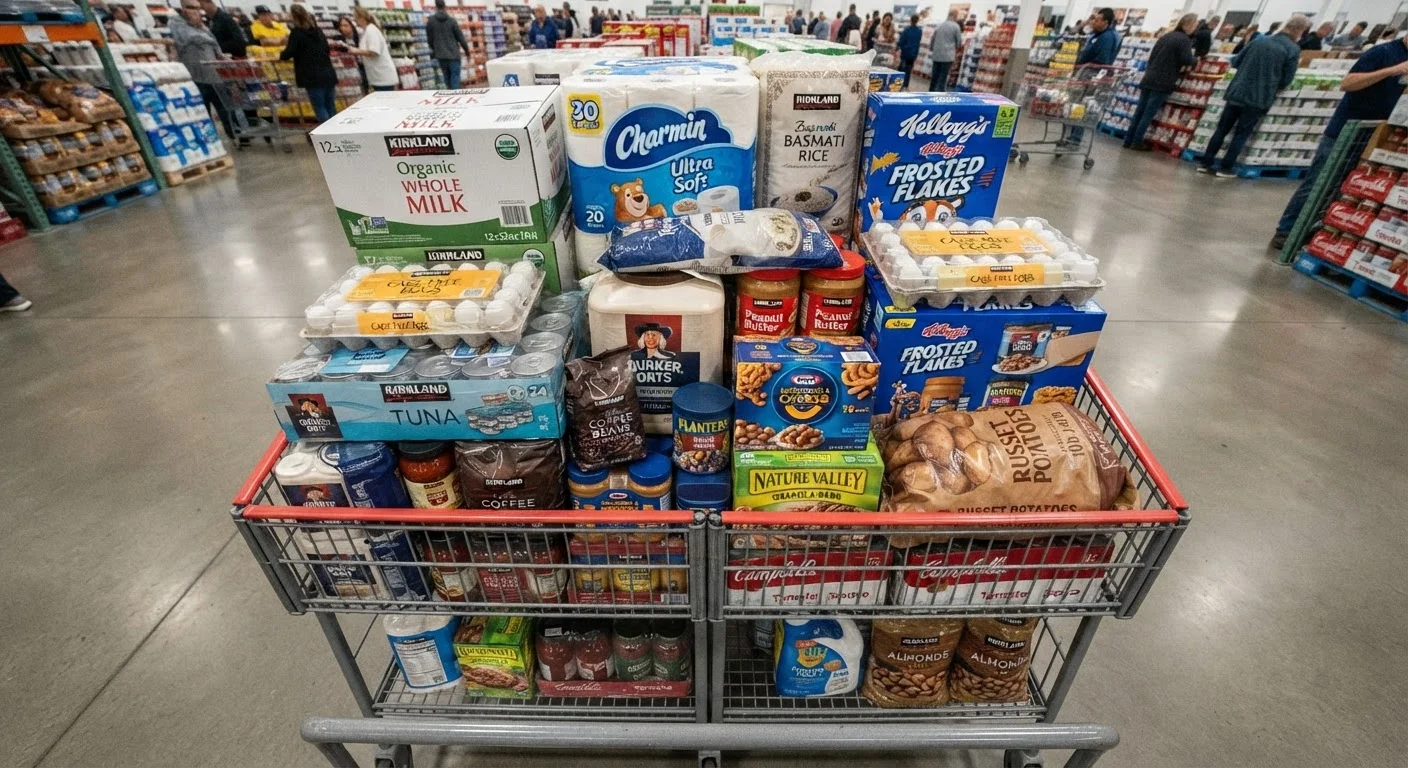
Photo: connectedsearches.com editorial
Key Takeaways
- Bulk buying lowers per-unit cost but requires enough storage space and consumption rate to avoid waste.
- Non-perishables and household staples are the strongest candidates for bulk purchase.
- Perishables bought in bulk often spoil before use, erasing any price advantage.
- Upfront cash outlay for bulk items can strain a tight monthly budget, even when the unit price is lower.
- Comparing price per unit, not sticker price, is the only reliable way to verify a bulk deal.
Lower cost per unit on high-use items
For products a household uses consistently, buying in larger quantities typically reduces the per-unit price. The savings are most reliable on shelf-stable goods with long use-by dates.
Fewer shopping trips for staples
Stocking up on non-perishables reduces how often you need to run out for basics, which also reduces exposure to impulse purchases during those trips.
Predictable supply of essentials
Families with a well-stocked pantry are less likely to pay full price in a pinch because they are not forced to buy whatever is available at the nearest store.
Works well alongside meal planning
Bulk staples such as rice, dried beans, and canned goods integrate naturally into a weekly meal plan, lowering per-serving food costs without requiring extra effort.
Spoilage erases savings on perishables
Produce, dairy, and fresh proteins bought in large quantities often spoil before a household can use them. The money spent on wasted food cancels out any per-unit discount.
Large upfront cost strains tight budgets
Bulk purchases require spending more money in a single transaction. For families managing week-to-week cash flow, this can create shortfalls elsewhere even when the long-term math is favorable.
Storage space is a real constraint
Warehouse-club quantities need dedicated shelf or floor space. Without it, items get lost, damaged, or forgotten, reducing the practical value of the purchase.
Unit price is not always lower in bulk
Some bulk packages carry a per-unit price equal to or higher than a store-brand equivalent at a conventional supermarket. Assuming bulk equals cheaper without checking the math is a common mistake.
Locks in one product, limiting flexibility
Committing to a large quantity of one item means you cannot easily take advantage of sales or markdowns on alternatives until that supply is exhausted.
How bulk buying actually works
Bulk buying means purchasing items in larger quantities than you would in a standard grocery run, usually at a lower price per unit. The savings come from retailers passing on packaging, handling, and restocking efficiencies to shoppers who take more off the shelf in one transaction.
The math is straightforward: if a 32-ounce bottle of dish soap costs $3.49 and a 90-ounce version costs $6.99, the per-ounce price drops from about 11 cents to about 8 cents. Over a year, that gap can add up for a family that goes through dish soap steadily.
The catch is that the per-unit price is only half the equation. The other half is whether your household will actually use the product at the rate needed to justify the purchase before it expires, degrades, or simply takes up space you do not have. For more context on how price cycles and unit-price comparisons work across grocery categories, see the deal-smart shopping primer that covers these fundamentals in depth.
Where bulk buying tends to pay off
Lower cost per unit on high-use items
For products a household uses consistently, buying in larger quantities typically reduces the per-unit price. The savings are most reliable on shelf-stable goods with long use-by dates.
Fewer shopping trips for staples
Stocking up on non-perishables reduces how often you need to run out for basics, which also reduces exposure to impulse purchases during those trips.
Predictable supply of essentials
Families with a well-stocked pantry are less likely to pay full price in a pinch because they are not forced to buy whatever is available at the nearest store.
Works well alongside meal planning
Bulk staples such as rice, dried beans, and canned goods integrate naturally into a weekly meal plan, lowering per-serving food costs without requiring extra effort.
The clearest wins come from products that do not spoil, do not change in quality over time, and get used at a consistent rate. Toilet paper, paper towels, laundry detergent, dish soap, canned tomatoes, dried pasta, rice, and dried beans are textbook examples. A family of four will use these products regardless of when they were bought, so the lower per-unit cost translates directly to savings.
Cleaning supplies and personal care items such as shampoo and body wash are also strong candidates, provided the formula does not irritate skin and the family will use one brand consistently. See our comparison of dried and canned beans for a concrete example of how bulk dried goods stack up against single-serve alternatives on cost and convenience.
Households that meal plan regularly get extra mileage from bulk staples because they can work ingredients into the weekly rotation before anything goes to waste. The meal planning guide for families walks through a practical system that pairs well with a bulk-buying approach.
~25%
Average per-unit savings on shelf-stable bulk goods
Consumer price comparisons across warehouse and conventional grocery formats commonly show per-unit savings of roughly 20 to 30 percent on non-perishable staples when buying in bulk versus standard sizes.
30-40%
Share of food purchased that American households waste
The USDA estimates that American households waste between 30 and 40 percent of the food supply, a figure that makes perishable bulk purchases a meaningful financial risk for many families.
Where bulk buying tends to cost more than it saves
Spoilage erases savings on perishables
Produce, dairy, and fresh proteins bought in large quantities often spoil before a household can use them. The money spent on wasted food cancels out any per-unit discount.
Large upfront cost strains tight budgets
Bulk purchases require spending more money in a single transaction. For families managing week-to-week cash flow, this can create shortfalls elsewhere even when the long-term math is favorable.
Storage space is a real constraint
Warehouse-club quantities need dedicated shelf or floor space. Without it, items get lost, damaged, or forgotten, reducing the practical value of the purchase.
Unit price is not always lower in bulk
Some bulk packages carry a per-unit price equal to or higher than a store-brand equivalent at a conventional supermarket. Assuming bulk equals cheaper without checking the math is a common mistake.
Locks in one product, limiting flexibility
Committing to a large quantity of one item means you cannot easily take advantage of sales or markdowns on alternatives until that supply is exhausted.
Produce, dairy, deli meats, and baked goods rarely make sense in bulk for most households. A five-pound bag of spinach at a great per-pound price is no bargain if half of it turns dark before Wednesday. Spoilage is the most common way bulk buying quietly inflates grocery costs, and it is easy to underestimate how quickly it happens.
Bulk quantities of items your family only occasionally uses are another common trap. Buying a gallon of a specialty hot sauce because the unit price looks attractive does not save money if it sits in the pantry for two years. The budget cooking habits that backfire article covers spoilage and over-purchasing in detail, including how to spot when a frugal habit is working against you.
Finally, buying in bulk can conflict with a flexible grocery approach, which relies on swapping items based on what is on sale that week. Locking into large quantities of one brand or variety reduces your ability to take advantage of shorter-term deals.
The cash-flow and storage problem
A lower per-unit price does not help a family whose budget is tight week to week. A $45 purchase of bulk paper goods and pantry staples may save $12 over buying the same items piecemeal over two months, but it requires $45 available today. For households managing cash flow carefully, that upfront cost can create a gap elsewhere in the monthly budget.
Storage is the other physical constraint. Warehouse-club quantities of cooking oil, cereal, or cleaning supplies need somewhere to go. Without a pantry, basement, or garage shelf to absorb the volume, bulk purchases end up stacked in living areas or shoved into spaces where they are hard to track, which leads to forgotten items expiring or duplicate purchases.
Membership fees factor into the real cost
This connects to the broader principle covered in the family budget basics hub: a savings strategy that disrupts cash flow or creates clutter is not genuinely saving money for that household, even if the math looks good on paper.
Checking whether a bulk price is actually lower
Not every bulk package carries a lower unit price. Some warehouse clubs and grocery stores sell bulk sizes at a per-unit cost that is equal to or higher than a standard store-brand equivalent at a conventional grocery store. The only way to know is to calculate price per unit for each option and compare across stores.
For packaged goods, the unit price is usually printed on the shelf label. For items sold by weight, divide the total price by the number of ounces or pounds. Then check the same calculation for the store brand at your regular supermarket. The store brands versus name brands comparison is useful here because it shows, by category, where generics at conventional stores often undercut even bulk name-brand pricing.
The deal-smart shopping hub has additional tools for tracking price-per-unit patterns over time, which makes it easier to recognize when a bulk price is genuinely below the normal market rate for that item.
The content provided on our blog site traverses numerous categories, offering readers valuable and practical information. Readers can use the editorial team’s research and data to gain more insights into their topics of interest. However, they are requested not to treat the articles as conclusive. The website team cannot be held responsible for differences in data or inaccuracies found across other platforms. Please also note that the site might also miss out on various schemes and offers available that the readers may find more beneficial than the ones we cover.