
Dried Beans vs. Canned Beans: What Actually Makes Sense for Busy Families

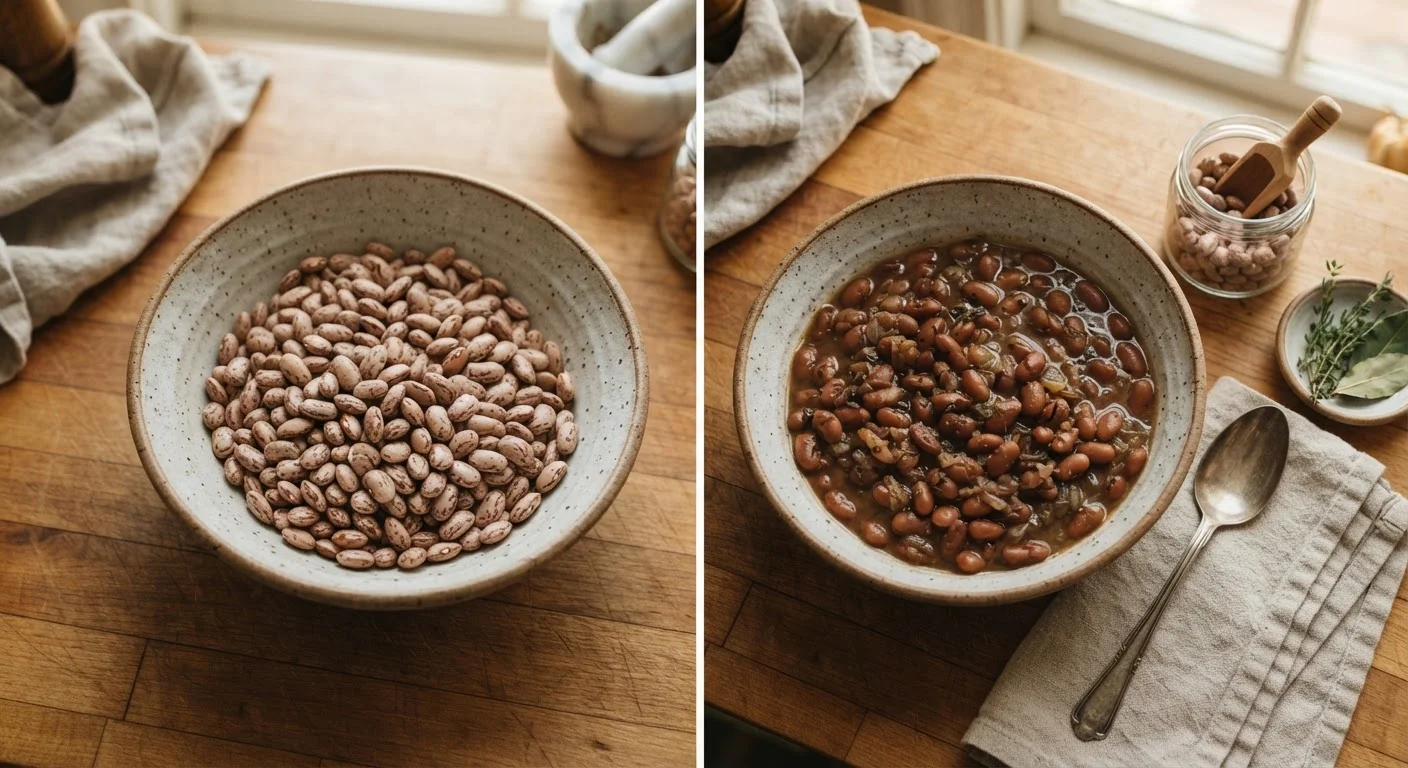
Photo: connectedsearches.com editorial
Key Takeaways
- Dried beans cost significantly less per serving than canned beans at most US grocery stores.
- Canned beans are ready in minutes, while dried beans require soaking and cooking time that can exceed two hours.
- Both forms deliver comparable nutrition; canned beans may have higher sodium unless you rinse them.
- A hybrid approach, keeping both on hand, lets families balance cost savings with weeknight convenience.
- Dried beans bought in bulk can cost as little as a quarter per serving, making them a budget standout.
The real cost difference
A one-pound bag of dried pinto or black beans typically costs between $1.50 and $2.50 at a US grocery store and yields roughly six cups of cooked beans, which works out to around six servings. That puts the cost per serving somewhere near $0.25 to $0.40. A 15-ounce can of the same beans holds about 1.75 cups of cooked beans and usually costs $0.80 to $1.50, or roughly $0.45 to $0.85 per serving.
The gap narrows when store brands are on sale, but dried beans hold a consistent price advantage over time. For a family eating beans three or four times a week, switching from canned to dried could save $10 to $20 a month without changing what is on the table. If you want to take that savings further, buying dried beans in bulk can push the per-serving cost even lower, provided you have storage space and will use them before quality declines.
| Criterion | Dried beans | Canned beans |
|---|---|---|
| Average cost per serving | $0.25 to $0.40 | $0.45 to $0.85 |
| Prep time | 8 to 12 hrs soak + 1 to 2 hrs cook | Under 5 minutes |
| Sodium content | None added | 300 to 400 mg per serving (pre-rinse) |
| Shelf life | 2 to 3 years (sealed, dry storage) | 2 to 5 years (unopened can) |
| Texture control | High: cook to preference | Low: pre-cooked, can get mushy |
| Flavor depth | Greater: absorbs aromatics while cooking | Moderate: flat without added seasoning |
| Equipment needed | Pot or pressure cooker | Can opener |
Time and convenience: an honest comparison
Dried beans require planning. Most varieties need an overnight soak of 8 to 12 hours, followed by 45 minutes to 2 hours of simmering on the stove. A pressure cooker or Instant Pot shortens that to 30 to 45 minutes without soaking, which makes dried beans more weeknight-friendly than they used to be. Even so, they are not a 6 p.m. decision.
Canned beans have no prep time to speak of. Open, rinse, and add. For soups, tacos, grain bowls, or quesadillas on a school night, that matters. The practical middle ground many families use is batch-cooking dried beans on the weekend and refrigerating or freezing them in two-cup portions, which mirrors canned beans in convenience without paying the price premium. This fits naturally into a weekly meal planning routine that keeps dinner predictable and grocery costs down.
Nutrition: closer than you might think
Dried and canned beans are nutritionally similar in protein, fiber, iron, and complex carbohydrates. A half-cup serving of cooked beans (from either source) delivers roughly 7 to 8 grams of protein and 6 to 8 grams of fiber, numbers that make beans one of the more affordable ways to meet daily nutritional needs.
The main difference is sodium. Canned beans are typically packed with salt, and a half-cup serving can contain 300 to 400 milligrams before rinsing. Rinsing canned beans under cold water for 30 seconds removes an estimated 40 percent of added sodium, which matters for families watching salt intake. Dried beans cooked at home have essentially no added sodium, so seasoning is entirely in your control.
Beans, in either form, are among the most affordable sources of plant protein available. For more context on affordable nutrition, see what nutritionists recommend for eating well on a tight budget.
~$0.25
Cost per serving, dried beans (bulk)
Based on typical US grocery store pricing for a 1-lb bag yielding roughly 6 servings.
40%
Sodium reduction from rinsing canned beans
Rinsing canned beans under running water for 30 seconds removes roughly 40 percent of added sodium, according to general food science guidelines.
7-8g
Protein per half-cup serving
Applies to most common bean varieties in both dried-cooked and canned form, based on standard USDA nutritional data.
Flavor and texture differences worth knowing
Dried beans cooked from scratch generally have a creamier texture and a more developed flavor, because you can season the cooking liquid with garlic, bay leaves, or aromatics as they simmer. The cooking liquid itself (often called aquafaba when drained from chickpeas) has culinary uses of its own.
Canned beans are softer and can turn mushy if overcooked, which affects certain dishes more than others. They work well in soups, dips, and mashed applications where texture is less critical. For bean salads or dishes where individual beans need to hold their shape, home-cooked dried beans tend to perform better.
Neither form is superior across every recipe. Knowing which texture suits a dish helps you decide which to reach for. Beans belong in the category of pantry staples that support balanced nutrition year-round, regardless of which form you choose.
The content provided on our blog site traverses numerous categories, offering readers valuable and practical information. Readers can use the editorial team’s research and data to gain more insights into their topics of interest. However, they are requested not to treat the articles as conclusive. The website team cannot be held responsible for differences in data or inaccuracies found across other platforms. Please also note that the site might also miss out on various schemes and offers available that the readers may find more beneficial than the ones we cover.