
Grocery Shopping With a Flexible List: Staying Healthy Without Locking In Every Item

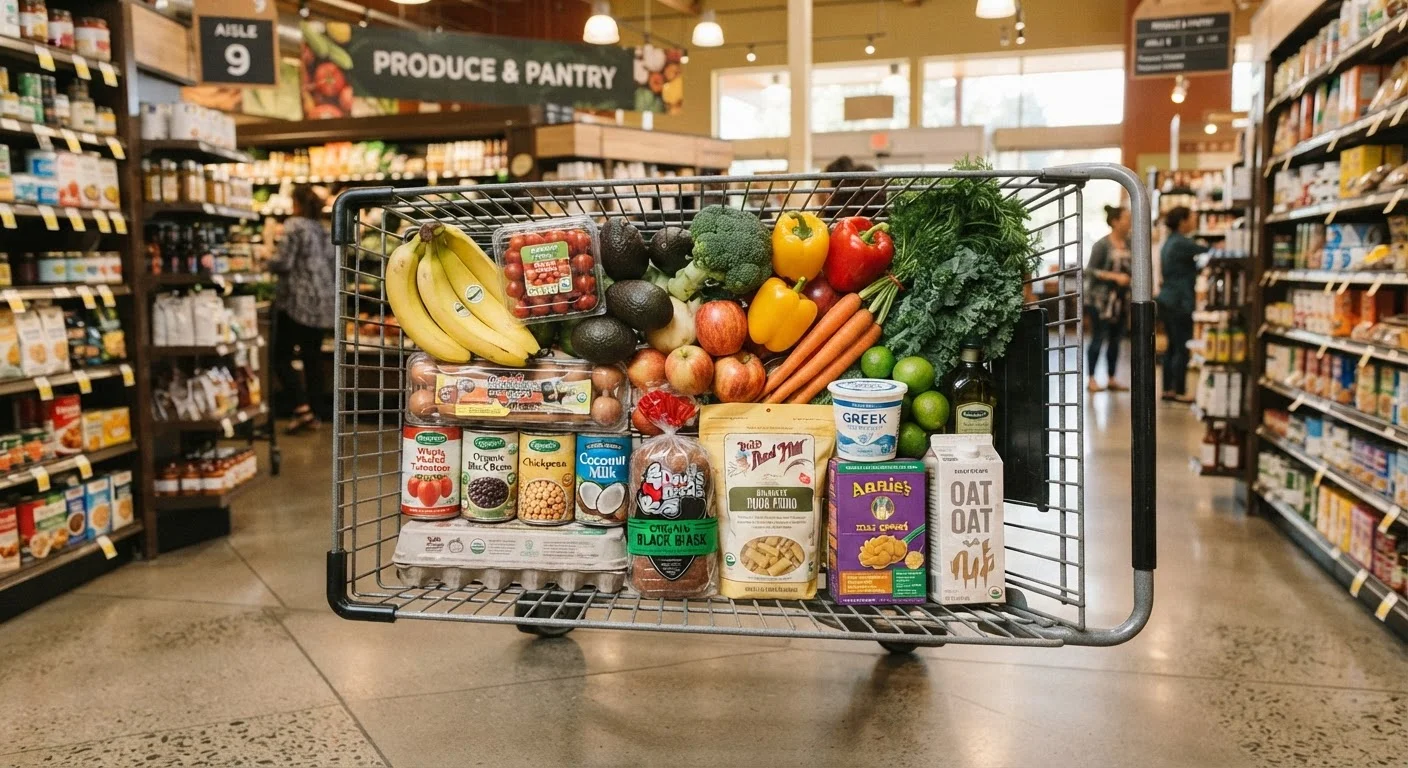
Photo: connectedsearches.com editorial
Key Takeaways
- A flexible grocery list defines outcomes by category, not by specific brand or product.
- Substituting within a food category preserves nutrition while capturing in-store price differences.
- Knowing your pantry before you shop prevents duplicate purchases and wasted spending.
- Unit price comparison is the fastest way to evaluate swaps at the shelf.
- Flexibility works best when paired with a simple weekly meal plan built around adaptable recipes.
Why a rigid list often costs more
A shopping list that names specific brands and products locks you into retail pricing regardless of what is on sale that week. Stores rotate discounts across categories constantly, and shoppers who cannot adapt to what is priced well when they arrive at the shelf pay full price by default. Over a year, that rigidity adds up.
The problem is not the list itself. A list prevents impulse buying, reduces decision fatigue, and cuts forgotten-item return trips. The problem is treating the list as a fixed contract rather than a starting framework. Flexible list-building keeps the structure without the cost ceiling. It also makes it easier to take advantage of seasonal produce, which tends to be less expensive and more nutritious when it is in season, without rewriting your whole plan.
For households prone to well-intentioned frugal habits that quietly raise costs, switching to a category-based list is one of the lower-effort corrections available.
Category-based list template
Organizes your shopping by food group or meal role rather than by specific item, making substitutions easier to spot.
Store app or weekly ad
Shows current markdowns and sale items before and during your trip so you can plan swaps in advance.
Unit price calculator (phone calculator)
Lets you compare cost per ounce or per serving between two products quickly at the shelf.
How to shop flexibly without losing nutritional consistency
The core principle is simple: decide what nutritional or culinary role each item fills, then stay open to which specific product fills that role. A week's meals need a protein source, a starchy grain or vegetable, dark vegetables, a fat source, and something acidic or flavorful for balance. If you plan at that level, individual product swaps do not disrupt the nutrition your household gets.
This approach pairs well with adaptable recipes: dishes that work equally well with chicken thighs or canned beans, with brown rice or farro, with kale or collard greens. One protein source stretched across multiple meals is a practical example of building around flexibility from the start. Similarly, keeping a reliable set of pantry staples means your baseline nutrition does not depend on any single fresh item being available or affordable.
Flexibility does not mean shopping without a plan. It means building a plan that can respond to what the store actually has at a reasonable price that week, rather than one that breaks down the moment one item is unavailable or overpriced.
Audit your pantry, fridge, and freezer first
Before writing a single item, check what you already have. Note ingredients that need to be used soon and staples that are running low. This prevents buying duplicates and points you toward meals you can finish cheaply with one or two additions. See the weekly prep checklist for a structured way to run this audit every time.
Build your list by category, not by specific item
Instead of writing 'brand X canned diced tomatoes,' write 'canned tomatoes, 14-16 oz.' Instead of 'baby spinach,' write 'dark leafy greens.' This keeps you anchored to a nutritional or recipe role while leaving room to act on in-store pricing. Group list items by section: produce, proteins, grains, dairy and eggs, canned and dry goods, and frozen. A weekly meal plan built before you write the list makes categories easier to fill out accurately.
Review the weekly ad and in-store markdowns before or upon arrival
Most major grocery stores post their weekly sales digitally. Scan the ad for items that overlap with your categories before you leave or while you walk the store. If ground turkey is on markdown and your list says 'ground protein,' the decision is already made. Avoid browsing sales for items outside your categories; that is where impulse spending starts.
Use unit price to evaluate any swap at the shelf
When two products could fill the same slot on your list, compare their unit price, which is the cost per ounce, per pound, or per serving shown on the shelf label. Divide the total price by the quantity if the label does not show it. A larger container is not always cheaper per unit, and a store brand is not always cheaper than a sale-priced national brand. The unit price label guide walks through this math in detail.
Substitute within the same nutritional category
Swapping one protein for another, or one dark leafy green for another, generally preserves the nutritional role of that ingredient in your meals. Swapping protein for a refined carbohydrate does not. Keep swaps within the same broad food group. For general guidance on meeting nutritional needs affordably, see what nutritionists recommend for eating well on a budget. If your household has specific dietary requirements, consult a registered dietitian before restructuring regular food categories.
Freeze or preserve opportunistic purchases immediately
If you buy more of an item because the price was right, only do so for products you can store. Proteins, bread, and many vegetables freeze well. Commit to freezing the surplus the same day you shop. Flexibility backfires when a good deal turns into spoilage. The freezer as a financial tool covers which foods hold up well and how to organize for easy access later.
Common mistakes that undercut a flexible approach
Flexibility without boundaries leads to drift. The most common errors are substituting outside the same food category, buying more than storage allows, and treating every marked-down item as a relevant deal. A sale on a product your household does not use and cannot store is not a saving.
Bulk purchases deserve particular attention. Buying a larger quantity of a perishable because the unit price looks good only works if you will use it before it spoils or can freeze the surplus. The full picture on bulk buying is worth reading before committing to larger sizes regularly.
Finally, flexibility is harder to maintain without a baseline plan. Households that shop without any weekly meal structure tend to buy items that do not combine into complete meals, leading to additional trips and spending. Even a rough plan covering four or five dinners is enough to make category-based shopping coherent. See how affordable staples can replace expensive specialty items for a related angle on keeping costs down without narrowing what your household eats.
The content provided on our blog site traverses numerous categories, offering readers valuable and practical information. Readers can use the editorial team’s research and data to gain more insights into their topics of interest. However, they are requested not to treat the articles as conclusive. The website team cannot be held responsible for differences in data or inaccuracies found across other platforms. Please also note that the site might also miss out on various schemes and offers available that the readers may find more beneficial than the ones we cover.