
Pantry Staples That Support Balanced Nutrition All Year

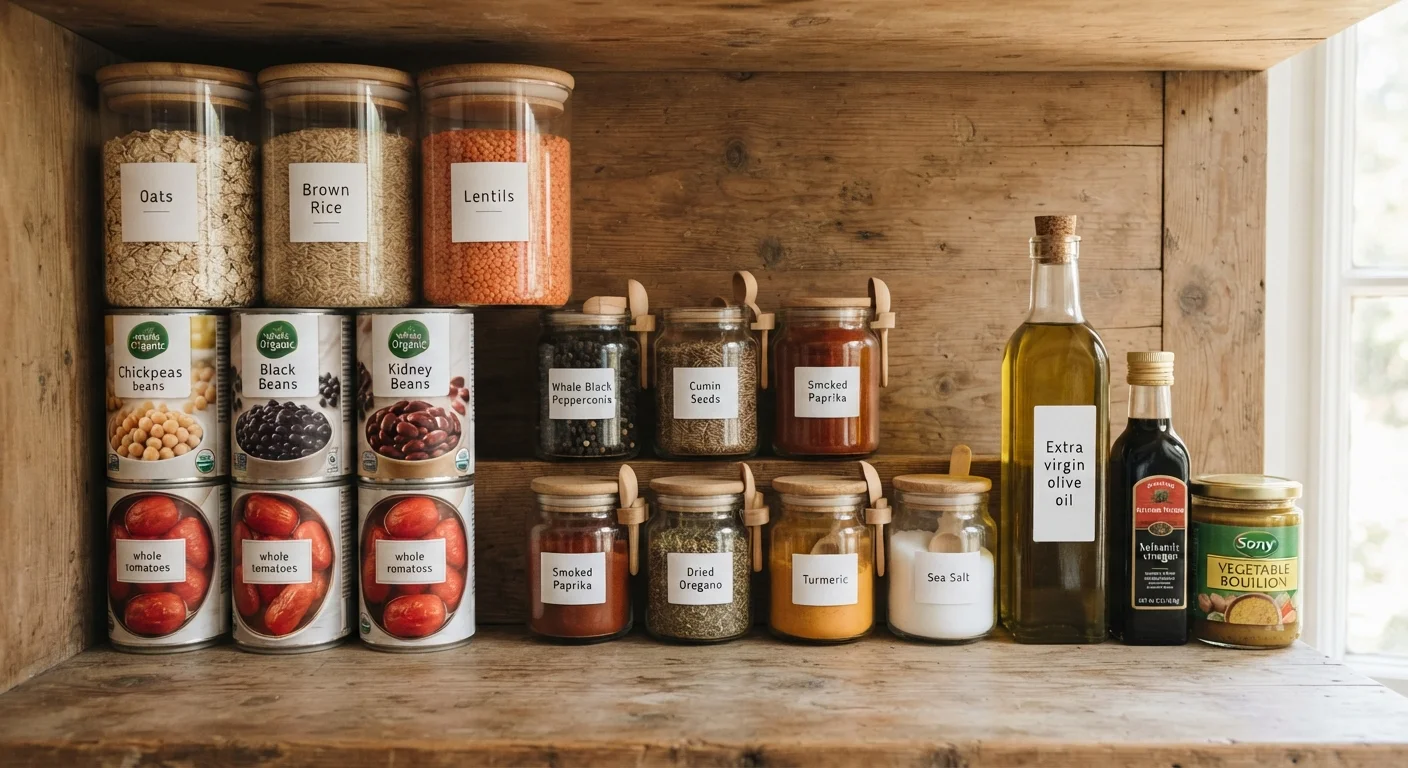
Photo: connectedsearches.com editorial
Why shelf-stable staples matter for family nutrition
Packaged produce and fresh proteins often get the most attention in nutrition conversations, but shelf-stable pantry ingredients do a large share of the work in most households. They are available year-round at consistent prices, hold up for months without waste, and can be combined in dozens of ways to meet a range of nutritional needs.
This guide is a reference list of categories and specific ingredients worth keeping on hand. It covers why each category matters nutritionally, what to look for on a label, and how these items connect to realistic, affordable eating habits. For general principles on meeting nutritional needs within a tight grocery budget, see what nutritionists recommend for eating well on a budget.
This article provides general nutrition information and is not a substitute for personalized dietary advice. Consult a registered dietitian or healthcare provider for guidance specific to your health situation.
| Cost per serving (dried lentils) | Roughly $0.10 to $0.20 (General grocery market averages) |
| Shelf life (canned goods) | 2 to 5 years for most canned foods (USDA Food Safety and Inspection Service) |
| Protein in cooked lentils | Approximately 18g per cup (USDA FoodData Central) |
| Fiber in rolled oats | About 4g per dry half-cup serving (USDA FoodData Central) |
| Sodium reduction from rinsing canned beans | Up to 40% reduction reported (Journal of Food Science, general findings) |
| Typical canned bean cost | Under $1 per 15-oz can (General U.S. grocery market averages) |
Legumes and dried pulses
Beans, lentils, split peas, and chickpeas are among the most nutrient-dense shelf-stable foods available. They supply protein, soluble fiber, iron, folate, potassium, and complex carbohydrates in a single ingredient. A standard 15-ounce can of beans typically costs under a dollar, and dried lentils are even more economical per serving.
Canned varieties are convenient and nutritionally comparable to dried. Choosing low-sodium or no-added-salt cans gives more control over sodium intake. Rinsing canned beans under water can reduce sodium content by a meaningful amount. Dried legumes require soaking and longer cook times but are the most cost-effective option, often costing $1 to $2 per pound with many servings per bag.
Lentils stand out because they cook in 20 to 30 minutes without soaking. Red lentils break down into a thick texture suitable for soups and sauces. Green and brown lentils hold their shape better for grain bowls and stews. Both types deliver roughly 18 grams of protein and 15 grams of fiber per cooked cup, based on USDA nutrient data.
For ideas on putting these ingredients to work in weekday meals, see preparing nutritious lunches with under ten ingredients.
Whole grains and oats
Brown rice, rolled oats, barley, and whole wheat pasta are the category most families already stock, though not always in their whole-grain forms. Whole grains retain the bran and germ, which carry B vitamins, magnesium, and fiber that refined versions lack.
Rolled oats are one of the most versatile and affordable options. A 42-ounce container provides roughly 30 servings at a cost of a few cents each. Oats supply beta-glucan, a type of soluble fiber associated with cholesterol management, according to the U.S. Food and Drug Administration's established health claim criteria. Brown rice takes longer to cook than white but costs about the same and supplies more fiber and micronutrients per serving.
Barley is an underused option that cooks similarly to rice and has a lower glycemic index than many other grains, based on general nutrition research. Whole wheat pasta costs only marginally more than refined pasta in most stores and swaps in directly for any pasta recipe. Affordable staples like oats deliver everyday nutrition without a premium price tag.
Canned and shelf-stable vegetables and tomatoes
Canned tomatoes, tomato paste, and canned pumpkin are practical vegetable sources that retain most of their nutritional value through the canning process. Canned tomatoes supply lycopene, vitamin C, and potassium. Tomato paste is concentrated and provides a dense source of tomato solids per tablespoon. Canned pumpkin is one of the more affordable sources of vitamin A in the form of beta-carotene on grocery shelves.
Other useful options include canned corn, canned green beans, and canned beets. When choosing canned vegetables, low-sodium versions are worth checking for since they are available at similar prices in most stores. Frozen vegetables are technically not pantry items, but they belong in the same conversation: freezing preserves nutrients well and often costs less per serving than fresh out-of-season produce.
Pairing these with legumes and grains allows a household to build nutritionally complete meals with minimal fresh shopping. Feeding a family of four for under $100 a week is more realistic when the pantry already carries the bulk of the meal's nutrition.
Fats, condiments, and flavor staples
Olive oil, canola oil, and nut butters supply healthy unsaturated fats along with calories that support satiety. A standard bottle of olive oil provides dozens of servings and stores well for up to two years if kept away from light and heat. Natural peanut butter and other nut butters supply protein and fat at a reasonable cost per serving.
Vinegars, dried herbs, cumin, turmeric, chili powder, and garlic powder have no significant caloric impact but make grain and legume dishes palatable, which directly affects how consistently a family eats from the pantry. Canned fish, particularly sardines and light tuna packed in water, adds lean protein and omega-3 fatty acids at low cost.
Building a working pantry is a habit, not a single shopping trip. Connecting pantry restocking to a weekly meal planning routine reduces both waste and the temptation to rely on more expensive convenience options. A flexible grocery list approach also helps households swap intelligently when a staple is out of stock or on sale in a different form.
The content provided on our blog site traverses numerous categories, offering readers valuable and practical information. Readers can use the editorial team’s research and data to gain more insights into their topics of interest. However, they are requested not to treat the articles as conclusive. The website team cannot be held responsible for differences in data or inaccuracies found across other platforms. Please also note that the site might also miss out on various schemes and offers available that the readers may find more beneficial than the ones we cover.