
Feeding a Family of Four for Under $100 a Week

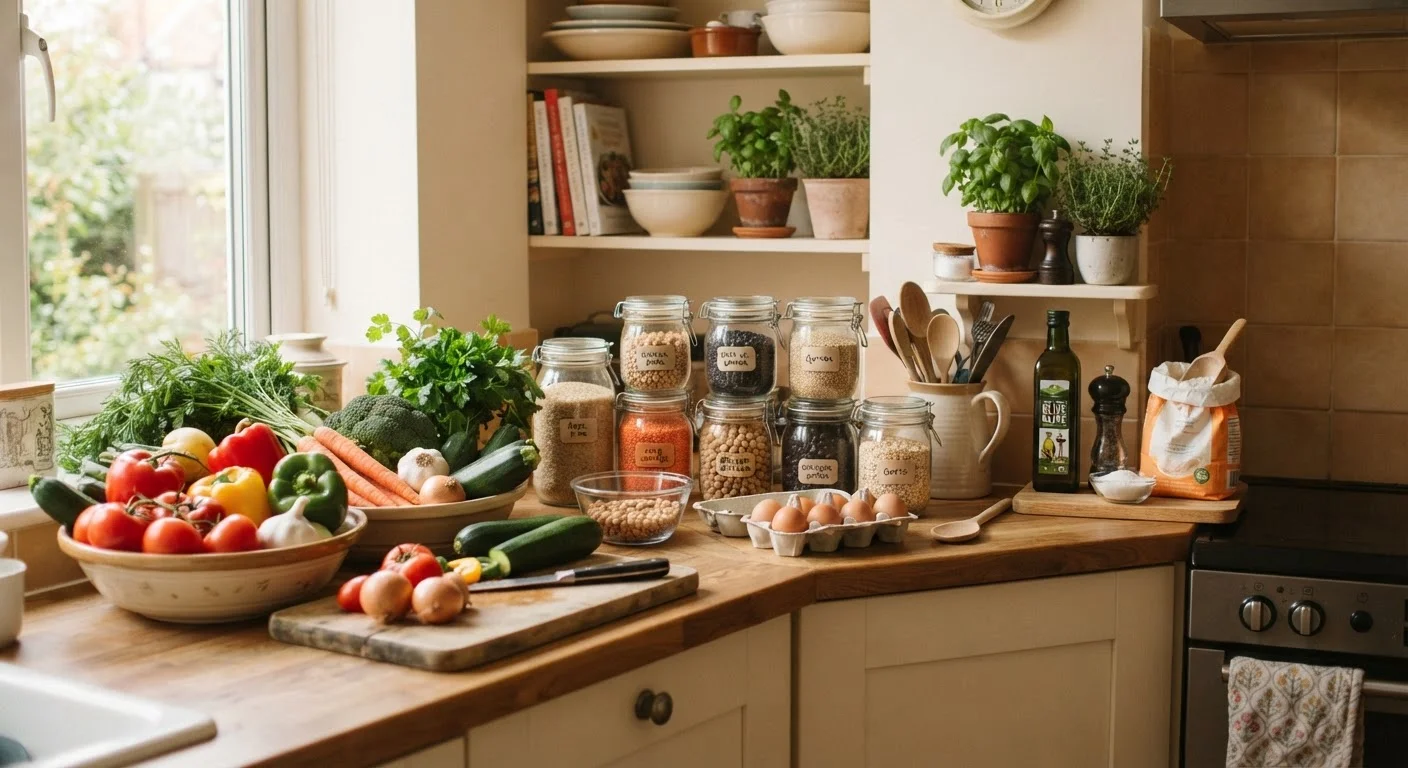
Photo: connectedsearches.com editorial
Key Takeaways
- A $100 weekly grocery budget for four people is achievable with consistent planning and a flexible ingredient list.
- Protein costs are the biggest variable; rotating between eggs, beans, canned fish, and ground meat keeps spending in check.
- Building meals around a short list of pantry staples reduces waste and cuts per-serving costs significantly.
- One batch-cooking session each week turns a single shopping trip into five or more ready-to-eat meals.
- Produce choices tied to what is on sale or in season stretch fresh food dollars without sacrificing nutrition.
What $100 a week actually buys
For a family of four eating three meals a day, $100 a week works out to roughly $0.60 per person per meal. That is tight but workable if spending is deliberate. The goal is not to eat poorly. It is to stop paying for convenience and packaging when scratch cooking costs a fraction of the price.
The Smart Grocery Savings hub has a range of strategies that pair well with the steps below. For now, the foundation is this: protein, produce, and grains together account for most of what a family spends, and controlling those three categories controls the budget.
A rough weekly allocation that tends to work: $30 to $35 on protein, $20 to $25 on produce, $15 to $20 on grains and dried goods, and $15 to $20 on dairy, eggs, canned goods, and condiments. These are starting points, not hard rules. Your store, your region, and what is on markdown that week will shift the numbers.
What you will need
Building a meal plan before you shop
Shopping without a plan is the single fastest way to blow a grocery budget. A written meal plan, even a rough one, tells you exactly what to buy and stops the cart from filling with things you do not need. Meal planning consistently lowers grocery bills for households that stick with it.
Spend ten minutes on the weekend mapping out five to six dinners. Lunches can come from dinner leftovers, which also saves time. Breakfast is usually the cheapest meal to plan: oats, eggs, and toast repeat without wearing out their welcome.
When you plan, build in at least one flexible "use it up" dinner late in the week. That slot absorbs whatever produce or protein needs to be cooked before it turns. It reduces waste, which is effectively the same as saving money. See our introduction to meal planning for families for a fuller walkthrough of the habit.
Check what you already have
Before writing a shopping list, go through your pantry, freezer, and fridge. Note what needs to be used first and what staples are already stocked. Buying duplicates of things you already own is a common and avoidable cost.
Write your meal plan around proteins on sale
Check your store's weekly ad before planning. Build at least two or three dinners around whatever protein is discounted that week. Ground turkey, chicken thighs, canned tuna, and eggs are consistently among the more affordable choices even without a sale.
Write a specific, categorized shopping list
Organize your list by store section: produce, meat, dairy, dry goods, canned goods. A categorized list speeds up the trip and reduces impulse purchases. Assign a rough dollar amount to each category to match your budget allocation before you leave home.
Stick to store brands for staples
For dry goods, canned beans, tomatoes, broth, flour, oats, and frozen vegetables, store-brand or generic products are functionally identical to name-brand versions in most recipes. The savings across a full shopping cart add up quickly.
Do one batch-cooking session each week
Cook a large batch of at least one grain (rice, oats, or pasta) and one protein on the same day you shop or the day after. These components assemble into fast weeknight meals without requiring a full cook from scratch each evening. See our beginner's guide to Sunday batch cooking for a practical starting point.
Track your actual spending for two weeks
Save your receipts and add up what you spent on food for two full weeks. Most families find their actual grocery spending is higher than their estimate. Having the real number gives you a clear target to work toward, and shows you exactly which categories are running over.
Making the most of what you buy
Buying ingredients that do multiple jobs is the core skill in budget cooking. A bag of dried black beans can become taco filling, soup, or a rice bowl side depending on what else is in the kitchen. Pantry staples like these form the backbone of hundreds of cheap, flavorful meals throughout the year.
Chicken is one of the most versatile proteins in this budget range. A single store-bought rotisserie chicken, for example, can realistically stretch across five completely different dinners with a little planning. Similarly, a large pot of soup or stew made on a Sunday can cover two or three weeknight meals. Soup uses inexpensive ingredients efficiently and reheats well for lunches too.
For weekday lunches specifically, a short ingredient list of ten items or fewer can produce a full week of varied, balanced lunches. Keeping lunch simple and mostly leftover-based is the clearest way to hold the weekly total under $100 without cutting corners on dinner.
Let the markdown aisle work for you
The content provided on our blog site traverses numerous categories, offering readers valuable and practical information. Readers can use the editorial team’s research and data to gain more insights into their topics of interest. However, they are requested not to treat the articles as conclusive. The website team cannot be held responsible for differences in data or inaccuracies found across other platforms. Please also note that the site might also miss out on various schemes and offers available that the readers may find more beneficial than the ones we cover.