
Meal Planning Basics: How Families Use It to Reduce Waste and Stress

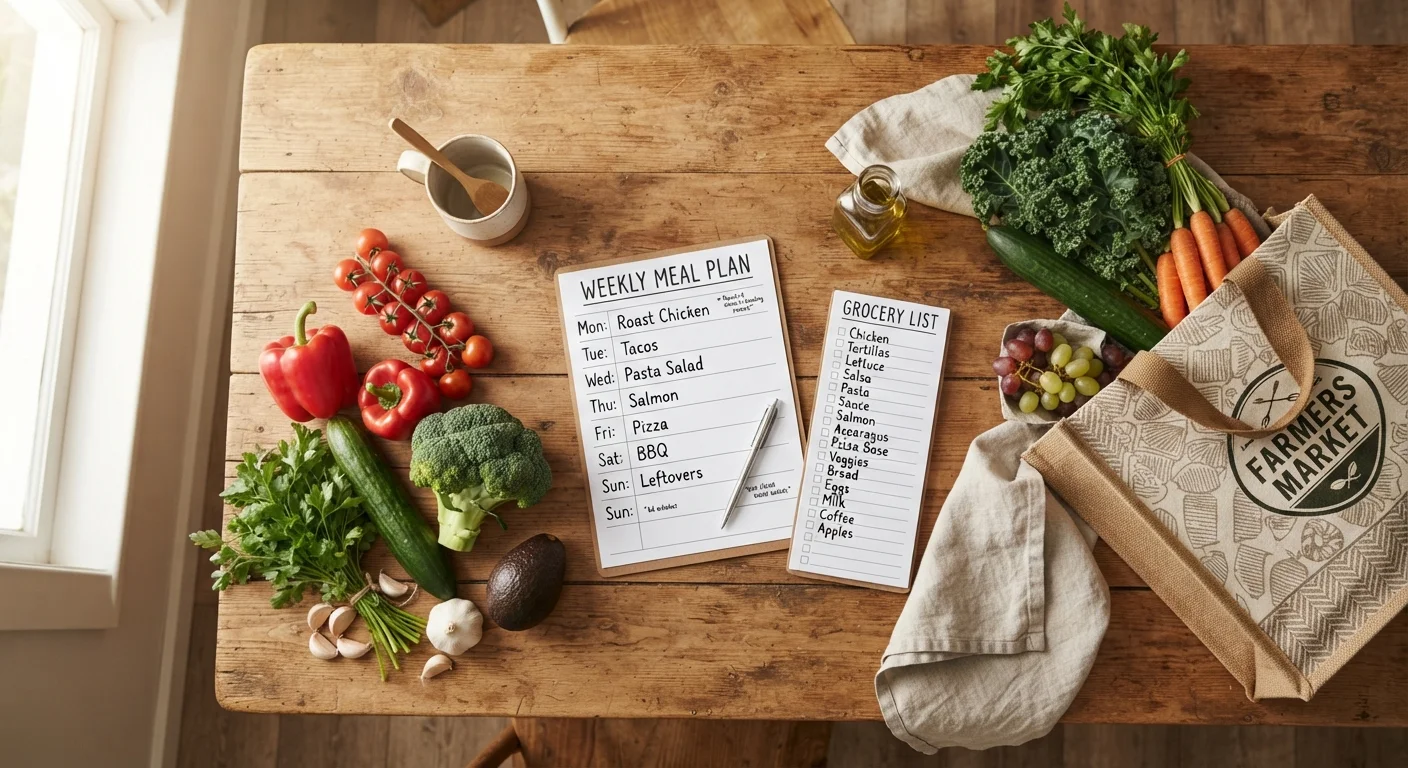
Photo: connectedsearches.com editorial
Key Takeaways
- Meal planning means deciding what you will cook before you shop, not following a rigid schedule.
- Planning even three or four dinners a week can meaningfully reduce food waste and impulse spending.
- A written plan removes the daily decision burden that causes families to rely on takeout.
- Beginners do best starting with a simple template rather than trying to plan every meal at once.
- Pairing meal planning with batch cooking or strategic freezing multiplies the time and money savings.
What meal planning actually means
Meal planning is deciding what your household will eat for the week before you go to the grocery store. That's the whole idea. It does not require color-coded binders, subscription boxes, or hours of prep on Sunday. At its simplest, it means writing down four dinners, checking what you already have, and building a list around the gaps.
The habit sits at the intersection of two things most families want: spending less money and spending less mental energy on food. Those goals are connected. When there's no plan, families tend to buy ingredients they don't use, forget what's already in the fridge, and default to takeout on busy nights. A basic plan closes each of those gaps at once.
For a closer look at how this habit translates into consistent grocery savings, see our guide to meal planning for real families.
Meal planning
Deciding in advance which meals your household will eat for the week, then shopping only for those ingredients.
Cross-use strategy
Choosing recipes that share at least one ingredient so you buy less and use everything you purchase.
Batch cooking
Cooking larger quantities of a food at one time, usually on a weekend, so components are ready to use across multiple weeknight meals.
Decision fatigue
The drop in mental energy and judgment that comes from making many choices in a day, which makes evening meal decisions harder than they should be.
Pantry meal
A simple dinner made from shelf-stable or frozen ingredients already at home, used as a fallback when the weekly plan falls through.
How it reduces food waste
The USDA estimates that American households waste roughly 30 to 40 percent of the food supply. At the household level, that waste shows up as wilted produce, forgotten leftovers, and proteins bought with good intentions but never cooked. Planning directly targets each of these.
When you know on Sunday that you need one bunch of spinach for Wednesday's pasta and Monday's eggs, you buy one bunch and use it across both meals. Nothing sits in the crisper until it goes soft. This ingredient-sharing approach, sometimes called a cross-use strategy, is one of the most practical tools a beginning meal planner has.
Your freezer is another asset worth building into the plan. Proteins near their use-by date, leftover cooked grains, and batch-cooked soups all freeze well and come back into rotation the following week. Using your freezer as part of the planning cycle can cut both waste and spending simultaneously.
How it cuts weeknight stress
Decision fatigue is real. Asking yourself what to cook every evening after a full workday draws on the same mental resources you've already spent. A weekly plan moves that decision to Sunday, when you have more time and lower stakes.
Families who plan their meals report fewer unplanned trips to the store and less reliance on expensive convenience food. The mechanism is straightforward: if you already know dinner is a sheet-pan chicken and the ingredients are on the counter, the evening choice is gone. You cook the thing on the plan.
This compounds when you combine planning with even light batch cooking. Cooking a pot of rice or roasting a tray of vegetables on the weekend gives weeknight meals a head start. A beginner's guide to Sunday batch cooking covers the practical steps without assuming you have hours to spend.
A simple system to get started
The lowest-friction version of meal planning has four steps.
- Check what you already have. Look in the fridge, freezer, and pantry before planning anything.
- Pick three to five dinners for the week. Prioritize meals that use ingredients already on hand and share at least one ingredient with another meal on the list.
- Write a grocery list from the plan, not from memory. List only what you need and nothing extra.
- Post the plan somewhere visible. The refrigerator door works. Visibility turns intent into action.
If your household is working with a tight weekly budget, the framework for feeding a family of four for under $100 a week shows how to structure meals so the math works without sacrificing nutrition.
Broader money habits that support this kind of planning are covered in the family budget basics hub, which addresses foundational personal finance alongside grocery spending.
Keep a running 'use first' list
Common beginner mistakes to avoid
Over-planning is the most common reason people abandon meal planning. Trying to schedule breakfast, lunch, dinner, and snacks for seven days in week one almost always fails. The plan becomes a source of guilt rather than a tool. Start small.
Buying in bulk without a plan for using everything is another trap. Bulk purchases can save money, but only when the household will actually consume the quantity before it spoils. Budget cooking habits that backfire covers this pattern and others that quietly inflate grocery costs despite good intentions.
Finally, planning meals the family doesn't actually enjoy is a plan that won't stick. A simple weekly rotation of eight to ten reliably liked dinners, adjusted for what's on hand and what's in season, works better than ambitious variety that leads to skipped meals and wasted ingredients.
Frequently Asked Questions
The content provided on our blog site traverses numerous categories, offering readers valuable and practical information. Readers can use the editorial team’s research and data to gain more insights into their topics of interest. However, they are requested not to treat the articles as conclusive. The website team cannot be held responsible for differences in data or inaccuracies found across other platforms. Please also note that the site might also miss out on various schemes and offers available that the readers may find more beneficial than the ones we cover.