
Batch Cooking on a Sunday: A Beginner's Path to Stress-Free Weeknights

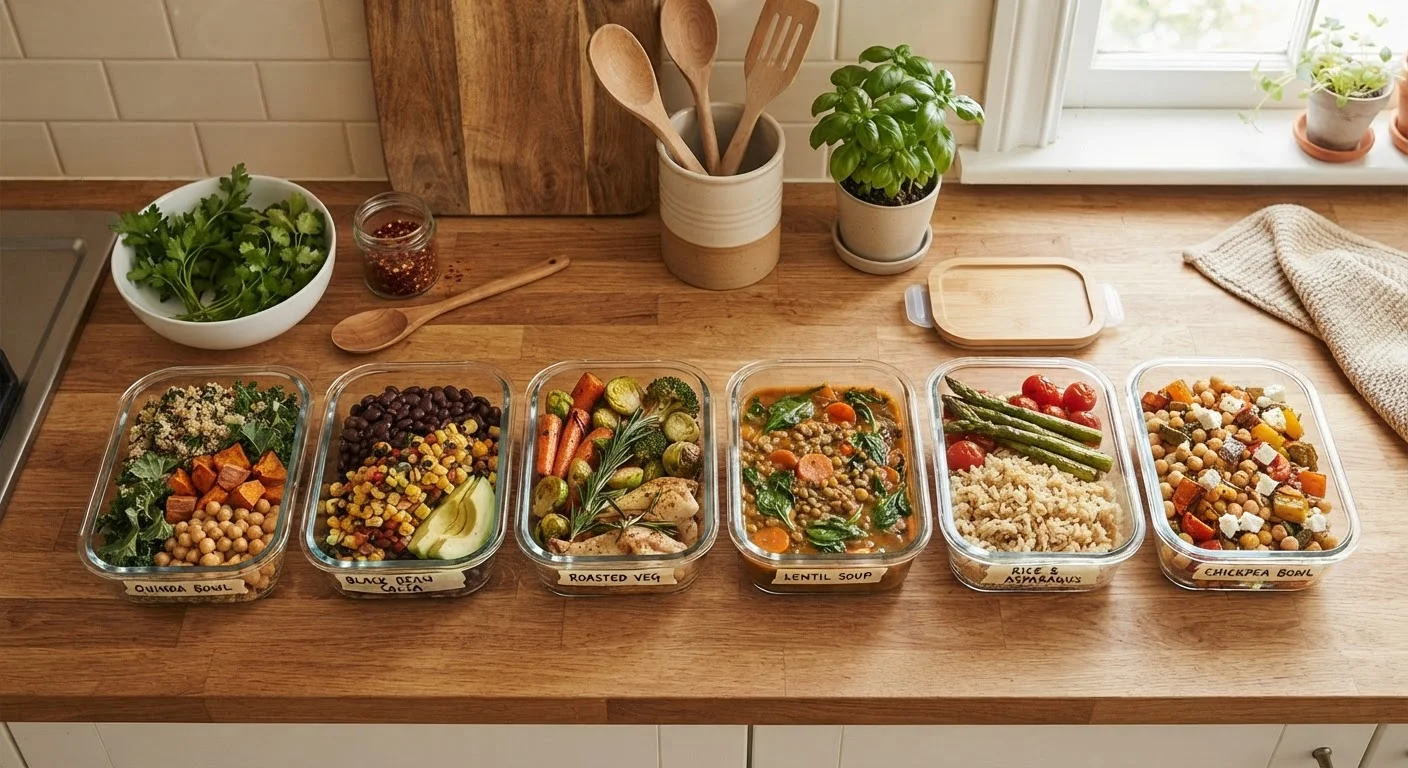
Photo: connectedsearches.com editorial
Key Takeaways
- Batch cooking one to two hours on Sunday can cover most of the week's dinners and lunches.
- The most reliable batch recipes are soups, grains, roasted vegetables, and braised proteins.
- Cooked food stored in airtight containers lasts three to four days in the fridge and three months in the freezer.
- Reheating with a little added liquid prevents dryness and preserves texture.
- Starting small with two or three components beats trying to cook a full week at once.
Why batch cooking works for busy families
Monday night is always the hardest. Everyone is tired, homework is pending, and cooking a meal from scratch feels like too much. Batch cooking solves that specific problem by doing the heavy work before the week starts.
The concept is straightforward: spend one to two hours cooking on Sunday, then pull from what you made throughout the week. You are not pre-making complete plated dinners. You are building components, a pot of beans, a tray of roasted vegetables, a big batch of rice or farro, that combine into different meals on different nights with almost no effort.
The cost angle matters too. Cooking in volume almost always costs less per serving than cooking small quantities nightly, because you buy larger amounts of fewer ingredients and waste less. Pair this habit with a weekly meal plan and the savings compound quickly. If your household already tracks food spending, batch cooking is one of the more reliable ways to bring that number down without eating less.
Start with what your family already eats
What to cook first: picking the right recipes
Not everything batch-cooks well. The recipes worth your Sunday time share a few traits: they improve or hold steady after a day or two in the fridge, they reheat without much fuss, and they work in multiple meal contexts.
Soups and stews are the most forgiving category. A big pot of lentil soup or chicken and vegetable stew takes about 45 minutes of mostly hands-off simmering and provides four to six servings. Big-pot soups are also one of the cheapest ways to stretch affordable ingredients across a whole week.
Grains are the second workhorse. A pot of brown rice, farro, or barley can go into grain bowls, stuffed peppers, or as a side on any night. Cook a large batch and portion it into containers while it is still warm.
Roasted vegetables are fast and flexible. Cut whatever is in season or on sale into similar-sized pieces, toss with oil and salt, and roast at 400 degrees until tender. They pair with nearly anything and reheat well in a skillet.
Proteins take more planning but pay off. A braise, like beans cooked from dry or chicken thighs in broth, holds well and works in tacos, over rice, or in a wrap. A single pre-cooked chicken can stretch across five different dinners with minimal additional work.
For ingredient ideas that keep costs low, see our reference on pantry staples for budget cooking.
How to store batch-cooked food safely
Food safety is not complicated, but it does require a few consistent habits. The USDA guideline for cooked food is to cool it within two hours and refrigerate it at 40 degrees Fahrenheit or below. Do not leave a pot of soup on the counter overnight and assume it will be fine in the morning.
Airtight containers matter. They slow moisture loss, prevent odor transfer in the fridge, and keep food fresher longer. Glass containers are durable and go straight from fridge to microwave. Plastic containers with tight lids work fine too. Label each container with the date so you know what to use first.
For the freezer, soups, stews, cooked beans, and grains all freeze well for up to three months. Cool the food completely before freezing, and leave about an inch of space at the top of each container to allow for expansion. Freeze in individual or family-sized portions depending on how you plan to use them.
Fridge life varies by food type
Reheating without losing quality
The biggest complaint about batch-cooked food is that it gets dry or rubbery when reheated. That is mostly a moisture problem. When you reheat grains or proteins, add a tablespoon or two of water or broth before microwaving or warming in a pan. Cover the dish to trap steam.
Soups and stews reheat well on the stovetop over medium-low heat. Stir occasionally and add a splash of water if the liquid has thickened too much in the fridge. A few minutes is usually enough.
Roasted vegetables reheat best in a hot skillet or back in the oven for five to ten minutes. The microwave softens them too much. If you are adding them to a grain bowl or wrap, room temperature works fine and skips the reheat entirely.
Pasta is worth separating from its sauce before storing. Pasta that sits in sauce absorbs liquid and turns mushy. Store them in separate containers and combine when reheating.
Building your first Sunday session
A first batch cooking session should be small. Pick two or three components, not a full week of complete meals. A reasonable starting point: one pot of soup or stew, one grain, and one tray of roasted vegetables. That covers most of the week's lunches and gives you a base for dinners.
Before you start, read through all your recipes and gather every ingredient. Group tasks by what uses the oven versus the stovetop so you can run both at once without confusion. Soups and stews need the most active attention early; once they are simmering, you can prep and roast vegetables.
Clean as you go rather than facing a full kitchen at the end. Fill containers while food is still warm, label them, and refrigerate promptly. The whole session, including cleanup, should take about two hours for a beginner.
Once this feels manageable, you can add more variety. Prepping a week of lunches with under ten ingredients is a natural next step, and the same Sunday session can cover both. For a broader view of how these habits fit into household food spending, the guide on feeding a family of four for under $100 a week offers a practical framework.
Frequently Asked Questions
The content provided on our blog site traverses numerous categories, offering readers valuable and practical information. Readers can use the editorial team’s research and data to gain more insights into their topics of interest. However, they are requested not to treat the articles as conclusive. The website team cannot be held responsible for differences in data or inaccuracies found across other platforms. Please also note that the site might also miss out on various schemes and offers available that the readers may find more beneficial than the ones we cover.