
The Real Difference Between Frozen and Fresh Vegetables

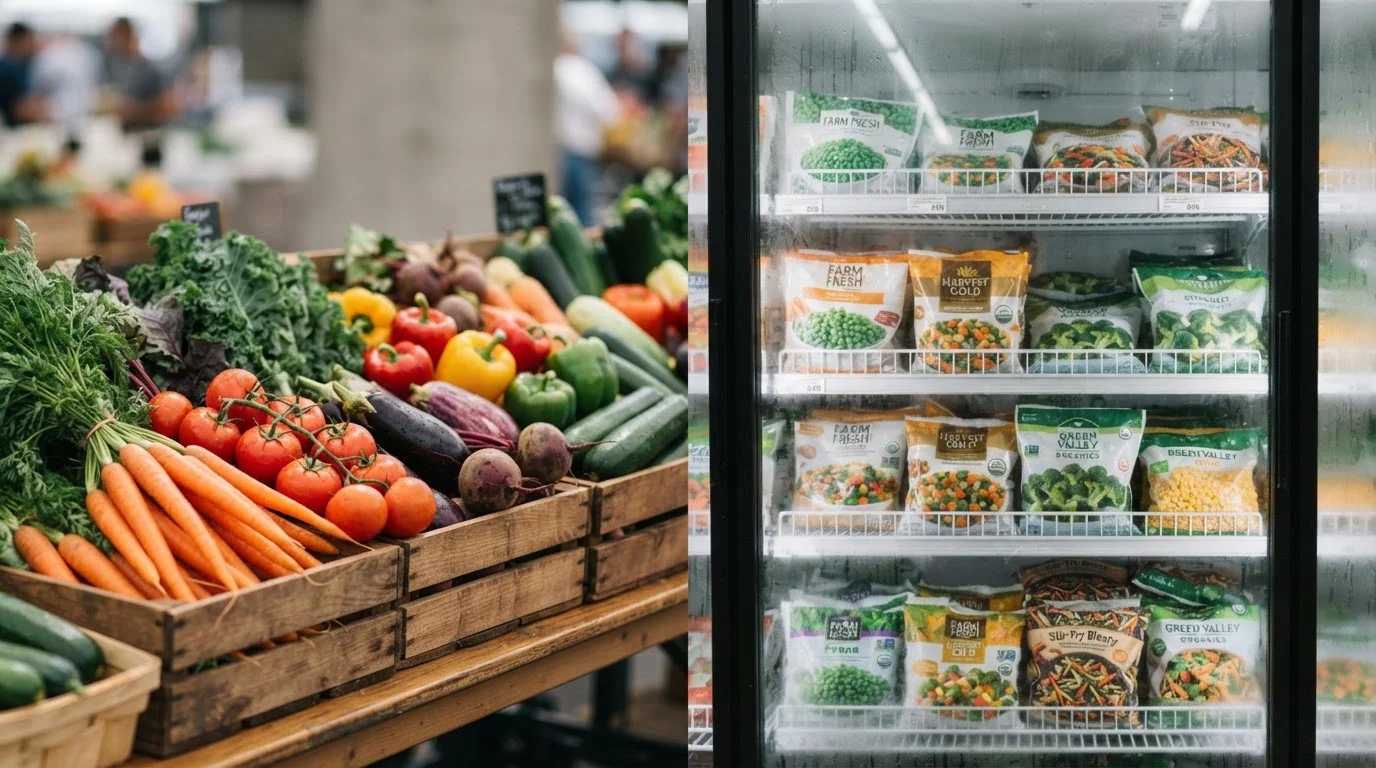
Photo: connectedsearches.com editorial
Key Takeaways
- Frozen vegetables are typically harvested at peak ripeness and flash-frozen, which preserves most nutrients.
- Fresh vegetables lose water-soluble vitamins like vitamin C during storage and transit.
- Frozen produce generally costs less per serving than fresh, especially for out-of-season items.
- Both forms can support a healthy diet; the better choice depends on your shopping habits and budget.
- Cooking method matters more than fresh-vs-frozen for final nutrient content on your plate.
What happens to nutrients between farm and fork
The nutritional gap between frozen and fresh vegetables is smaller than most people expect, and in some cases it runs in the opposite direction from what intuition suggests.
Fresh vegetables begin losing certain nutrients as soon as they are harvested. Vitamin C and some B vitamins are water-soluble and degrade with exposure to heat, light, and air. By the time a head of broccoli travels from a farm to a distribution center, sits in a store, and spends several days in a home refrigerator, it may have lost a meaningful share of those nutrients. One set of published research findings, cited by the Academy of Nutrition and Dietetics, has found that some fresh vegetables can lose 15 to 55 percent of vitamin C within a week of harvest depending on storage conditions.
Frozen vegetables follow a different path. Producers typically harvest them at or near peak ripeness and then blanch them briefly in hot water before flash-freezing. Blanching deactivates enzymes that would otherwise continue breaking down nutrients. The freezing step then pauses most further degradation. The result is that frozen vegetables often arrive at your table with nutrient levels comparable to, or in some cases higher than, their fresh counterparts purchased days after harvest.
Fat-soluble nutrients such as vitamin A and carotenoids are more stable during both storage and freezing, so the fresh-vs-frozen difference matters less for those compounds. The biggest gap tends to show up with heat-sensitive, water-soluble vitamins.
This article is for general informational purposes only and is not medical or dietary advice. Consult a registered dietitian or qualified healthcare professional for guidance tailored to your individual health needs.
Cost comparison across seasons
Price is where frozen vegetables have a consistent structural advantage. Fresh produce prices shift with growing seasons, weather events, fuel costs, and regional supply chains. A bag of fresh spinach that costs $2.50 in June may reach $4.00 or more in January. Frozen spinach, by contrast, stays at a relatively stable price throughout the year because it is processed and warehoused in bulk during peak harvest.
| Criterion | Fresh vegetables | Frozen vegetables |
|---|---|---|
| Nutrient retention at purchase | Variable; declines during transit and storage | Stable; locked in at harvest via flash-freezing |
| Price consistency | Fluctuates with season and supply | Relatively stable year-round |
| Typical cost per serving | Often higher, especially out of season | Generally lower across most vegetables |
| Spoilage risk | Spoils within days to a week | Stays usable for months |
| Prep time | Requires washing, peeling, chopping | Ready to cook from bag |
| Texture for raw use | Suited to salads and raw dishes | Not suitable for raw preparations |
| Best cooking methods | All methods including raw | Steam, microwave, roast, stir-fry |
For families managing a fixed grocery budget, that price stability is practical. It allows for consistent meal planning without factoring in seasonal price swings. Seasonal produce calendars can help shoppers time fresh purchases to coincide with lower prices, but this requires planning and flexibility that not every household has.
Waste is another cost factor that rarely appears on a price tag. Fresh vegetables spoil, and spoiled food is money in the trash. Well-intentioned frugal shopping habits can quietly inflate grocery costs when fresh produce goes bad before it is used. Frozen vegetables eliminate that risk almost entirely.
How cooking affects what you actually eat
Whether a vegetable started as fresh or frozen matters less than how it is cooked. Boiling vegetables in large amounts of water and discarding the water drains water-soluble vitamins regardless of the vegetable's origin. Steaming, microwaving, or roasting with minimal water preserves more nutrients across both categories.
Overcooking frozen vegetables is a common mistake. Because they are already blanched, they need less cooking time than raw fresh vegetables. A few minutes of steaming is usually enough. Prolonged boiling turns them mushy and strips additional nutrients.
For dishes where texture is important, fresh generally performs better. Raw salads, crudites, and presentations where crispness matters work best with fresh vegetables. For soups, stews, stir-fries, casseroles, and grain bowls, frozen vegetables work well and often save time because they require no washing, peeling, or chopping.
Families looking to get more from their freezer section can find practical guidance in how to use a freezer as a full meal-planning tool, which covers how to keep a well-stocked frozen inventory without overcomplicating weeknight cooking.
Making a practical choice for your household
There is no single correct answer for every family. A useful starting point is to think about how your household actually shops and cooks, not how it ideally would.
If produce regularly spoils before it is used, frozen is the more economical and nutritionally reliable option. If you shop at a farmers market weekly during summer months and cook the same day, fresh local produce bought in season is a sound choice. Many households find a combination works: frozen peas, corn, spinach, and mixed vegetables for weeknight cooking, and fresh items bought in small quantities for immediate use or for recipes where texture matters.
General guidance on meeting nutritional needs on a limited budget consistently points to total vegetable intake as the priority, not the precise source. A family that eats frozen broccoli regularly is in a better nutritional position than one that buys fresh broccoli and throws half of it away.
For households trying to reduce both waste and spending at the same time, using the freezer as a financial tool covers which foods freeze well and how to organize a freezer for practical daily use.
The content provided on our blog site traverses numerous categories, offering readers valuable and practical information. Readers can use the editorial team’s research and data to gain more insights into their topics of interest. However, they are requested not to treat the articles as conclusive. The website team cannot be held responsible for differences in data or inaccuracies found across other platforms. Please also note that the site might also miss out on various schemes and offers available that the readers may find more beneficial than the ones we cover.