
The Anatomy of a Retail Price: Why What You See Rarely Reflects What You Should Pay

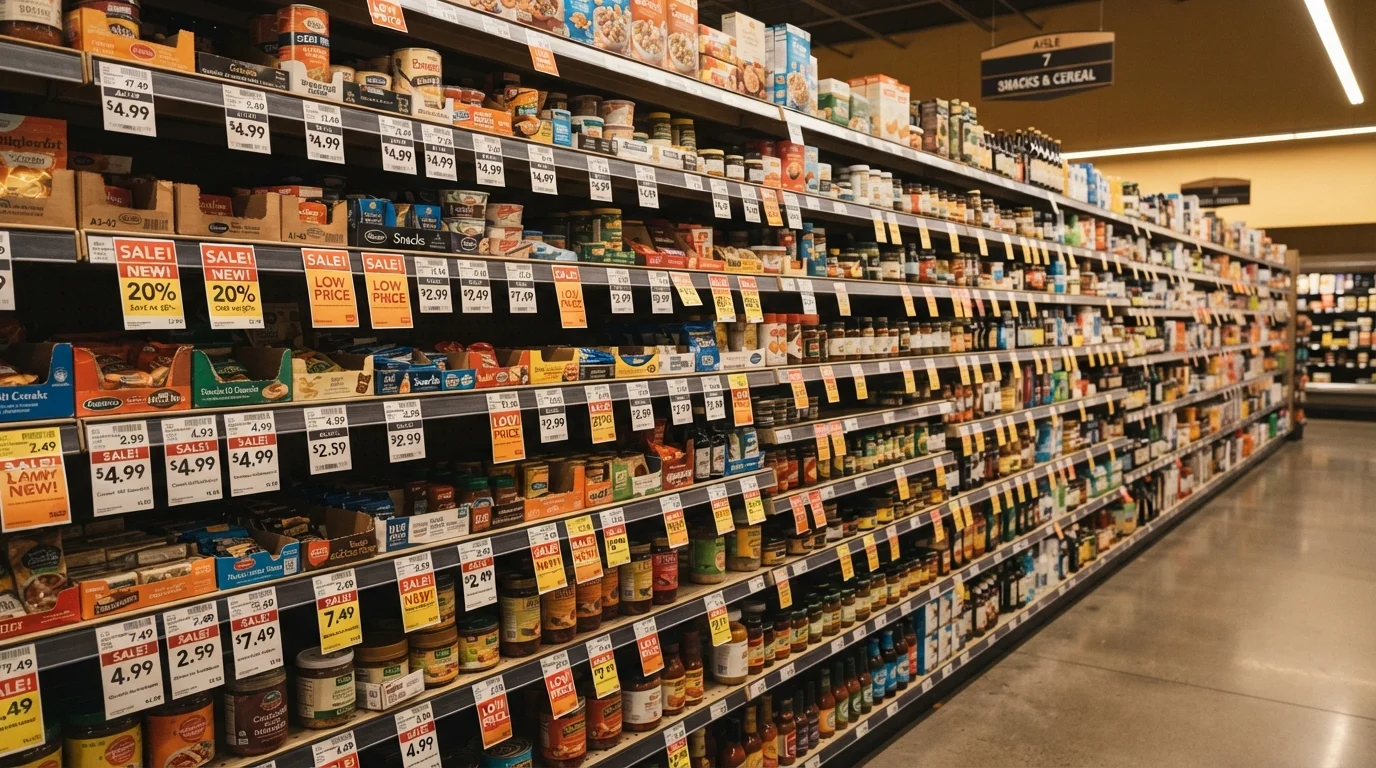
Photo: connectedsearches.com editorial
Key Takeaways
- A retail price reflects markup strategy and market positioning, not just production cost.
- Anchor prices and reference prices are set deliberately to shape how you judge a deal.
- Psychological pricing cues like .99 endings are proven to influence purchase decisions.
- Sale prices are sometimes meaningful markdowns and sometimes restores from artificial highs.
- Price history data is the most reliable way to judge whether a discount is real.
- Unit price comparisons cut through packaging and size manipulation more reliably than sticker prices.
How a price gets built before it reaches the shelf
Every price on a shelf starts with a cost: what the retailer paid to acquire the item, including manufacturing, shipping, and warehousing. On top of that base, the retailer applies a margin. In commodity grocery categories, margins are thin, sometimes 1 to 5 percent on staples like milk or eggs. In categories with fewer direct comparisons, such as bedding, cookware, or supplements, margins routinely run 40 to 60 percent or higher.
Cost-plus pricing is only part of the picture. Retailers also watch what competitors charge, what shoppers have historically paid, and how much demand exists. When demand is stable and competition is high, prices stay close to cost. When a category is opaque or brand loyalty is strong, retailers have room to price on perception rather than cost.
This matters because the gap between a product's cost and its price is not fixed, visible, or consistent across stores or time. Two retailers can sell the identical product at prices that differ by 30 percent. Neither price is wrong; both reflect different margin decisions and different assumptions about their shoppers.
Anchor prices and reference prices
When a tag shows a price crossed out above the current price, that crossed-out number is an anchor. Anchors work because people evaluate prices relatively, not absolutely. A $40 item marked down from $80 feels like a better purchase than the same item priced at $40 with no reference. The anchor shifts the perceived value regardless of whether the higher price was ever widely charged.
The Federal Trade Commission has guidelines that require reference prices to reflect prices at which items were actually offered for sale in good faith. However, enforcement is complaint-driven and not comprehensive, so inflated anchors do appear in the market. Checking price history data for a product before buying is the most reliable way to evaluate whether an anchor reflects a real prior price or a manufactured one.
MSRP is a reference point, not a benchmark
Manufacturer's Suggested Retail Price (MSRP) is a common anchor in electronics and appliances. Because MSRP is set by the maker and often never charged at retail, a discount from MSRP may say little about what you are actually saving compared to the market norm.
Psychological pricing cues
Prices ending in .99 or .95 are deliberate. Consumer research published in the Journal of Consumer Research and elsewhere has documented that people read prices left to right and anchor heavily on the first digit. A price of $4.99 registers closer to $4 than to $5, even when the difference is a single cent. This effect is consistent enough that retailers apply it almost universally in mass-market settings.
Charm pricing is one of several psychological tools in common use. Round numbers ($10, $50, $200) signal premium or value depending on context. Odd-lot prices ($7.43, $12.17) can suggest clearance or warehouse sourcing. Large font for the dollar amount paired with small font for the cents is a layout choice that amplifies the leftmost-digit effect. None of these cues tell you whether the underlying price is fair; they tell you how the retailer wants you to feel about it.
When sales are real and when they are not
A genuine markdown happens when a retailer reduces a price from what it has been consistently charging, typically to move inventory, respond to competition, or match a seasonal pattern. Predictable markdown calendars exist across many categories. Appliances, for example, often see price reductions around model-year transitions. Clothing markdowns follow end-of-season timing. Seasonal price cycles across household categories follow patterns that are worth learning before a large purchase.
A manufactured sale, sometimes called a fictitious sale, starts with a price inflated above the normal selling price specifically so a discount can be advertised. The final price may be the same as or higher than what was charged before the "sale" began. Price history tools are the clearest check: if a product has sold at or near the "sale" price for most of the past few months, the event label does not represent a real reduction.
Size, quantity, and the unit price layer
Even when a sticker price is accurate and honest, it may not be the right number to compare. Retailers frequently vary package sizes to make direct comparison harder. A 12-ounce package priced at $3.49 and a 16-ounce package priced at $4.29 cannot be compared by their sticker prices. The unit price, cost per ounce in this case, gives you the actual comparison: approximately 29 cents per ounce versus 27 cents per ounce.
Most grocery stores are required by state law to display unit prices on shelf labels, though formatting and consistency vary. Reading unit price labels accurately is a skill that applies across almost every packaged category. Shrinkflation, where package size shrinks while price holds steady, is effectively invisible without unit price comparison. The gradual increase in grocery totals that many families notice often traces partly to this mechanism.
Frequently Asked Questions
The content provided on our blog site traverses numerous categories, offering readers valuable and practical information. Readers can use the editorial team’s research and data to gain more insights into their topics of interest. However, they are requested not to treat the articles as conclusive. The website team cannot be held responsible for differences in data or inaccuracies found across other platforms. Please also note that the site might also miss out on various schemes and offers available that the readers may find more beneficial than the ones we cover.