
Unit Price Math: The One Shelf Label Skill That Changes How You Shop

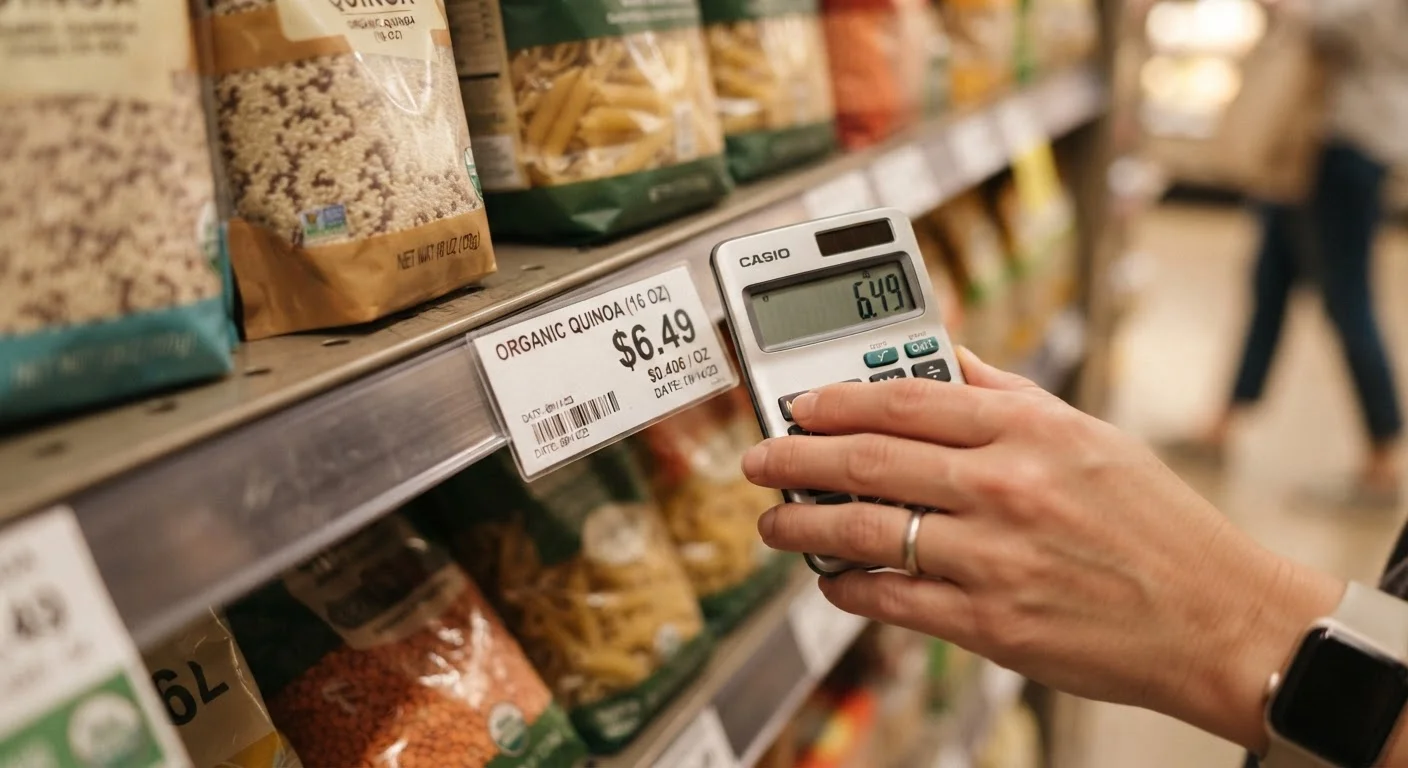
Photo: connectedsearches.com editorial
Key Takeaways
- Unit price lets you compare products of different sizes without doing mental gymnastics in the aisle.
- Bigger packages are not always cheaper per unit; the math sometimes favors the smaller size.
- State laws vary on whether retailers must display unit prices, so you may need to calculate it yourself.
- The unit label only helps if both products use the same unit of measurement for comparison.
- Combining unit price awareness with a flexible shopping list produces the most consistent savings.
What the shelf label is actually telling you
Most grocery shelf labels show two numbers: the total price of the item and the price per unit. That second figure is the one most shoppers ignore, and that habit costs money over time.
The unit price normalizes cost across package sizes. A 12-ounce jar of peanut butter priced at $3.49 and a 28-ounce jar priced at $7.19 look like completely different purchases until you reduce them to cents per ounce. The 12-ounce jar works out to about 29 cents per ounce; the 28-ounce jar comes to about 26 cents per ounce. The larger jar is cheaper, but only by converting both to the same basis can you see that clearly.
This same logic applies across almost every product category: cereal, yogurt, laundry detergent, canned goods, and paper products. Package sizes are not standardized across brands, which means the only fair comparison is cost per unit of measurement. Retailers know this, which is why unit price laws were introduced in several states starting in the 1970s. Where those laws apply, retailers must display the unit price. Where they do not, calculating it yourself takes about ten seconds.
The calculation is: total price divided by total quantity. If a bottle of olive oil costs $8.99 and contains 33.8 fluid ounces, the unit price is $8.99 divided by 33.8, which equals about 26.6 cents per fluid ounce. Most smartphones have a calculator built in. The habit of punching in these numbers becomes quick with practice.
When the math surprises you
The assumption that bigger always means cheaper is wrong often enough to matter. Stores regularly place promotions on mid-sized packages to clear inventory, which can push the unit price of that size below the large-format option. Club store sizes, meanwhile, carry their own trade-offs: a lower unit price means little if the product expires before your household finishes it.
Store-brand versus name-brand comparisons also reward unit price scrutiny. A name brand running a buy-one-get-one sale can end up cheaper per unit than the store brand at full price. The label resolves that question immediately.
Check the unit before you compare
Seasonal products present a related pattern. Party-size snack bags sold around major holidays sometimes carry a higher unit price than the same brand's regular-size bags sold year-round. The oversized bag reads as a value because of its size, but the math tells a different story.
For households tracking a grocery budget, understanding why grocery bills creep upward often starts with these small per-unit gaps across dozens of weekly purchases. Each individual difference is minor; accumulated across a full cart and repeated every week, the total is not.
Practical steps for using unit price in the aisle
The most reliable method is to make unit price checking a fixed habit for product categories where you buy consistently: breakfast cereal, canned tomatoes, cooking oils, cleaning supplies, paper goods. For items you buy occasionally, the habit matters less.
When shelf labels display unit prices in different units for competing products, stop before comparing. Fluid ounces and dry ounces measure different things. Grams and ounces cannot be compared without conversion. A quick conversion using your phone prevents a mistake. Most unit price discrepancies happen because the retailer or manufacturer switched measurement units across similar products.
A flexible approach to your shopping list makes unit price analysis more useful. If you arrive committed to one specific brand in one specific size, the math is irrelevant. A flexible grocery list strategy lets you substitute based on what the unit price reveals, which is where real savings accumulate.
Unit price awareness pairs naturally with broader price literacy. Understanding how retail prices are structured can help you recognize when a sale is genuine versus when the original price was inflated to make a discount look larger than it is.
30+
U.S. states with unit pricing laws on the books
Requirements vary widely in scope, covered store types, and enforcement; check your state's consumer protection agency for specifics.
10 sec
Time to calculate unit price manually
Dividing shelf price by package quantity on a phone calculator takes roughly ten seconds per item for most shoppers.
Up to 30%
Potential cost difference between package sizes of the same product
Consumer research has found per-unit price gaps between small and large sizes of the same item can reach 30% or more depending on category and retailer.
For families building stronger shopping habits from the ground up, the deal-smart shopping primer for families covers the broader framework within which unit price comparison fits as one consistent tool.
Frequently Asked Questions
The content provided on our blog site traverses numerous categories, offering readers valuable and practical information. Readers can use the editorial team’s research and data to gain more insights into their topics of interest. However, they are requested not to treat the articles as conclusive. The website team cannot be held responsible for differences in data or inaccuracies found across other platforms. Please also note that the site might also miss out on various schemes and offers available that the readers may find more beneficial than the ones we cover.