
Why Cheap Eating Has a Reputation Problem (And Why It Is Wrong)

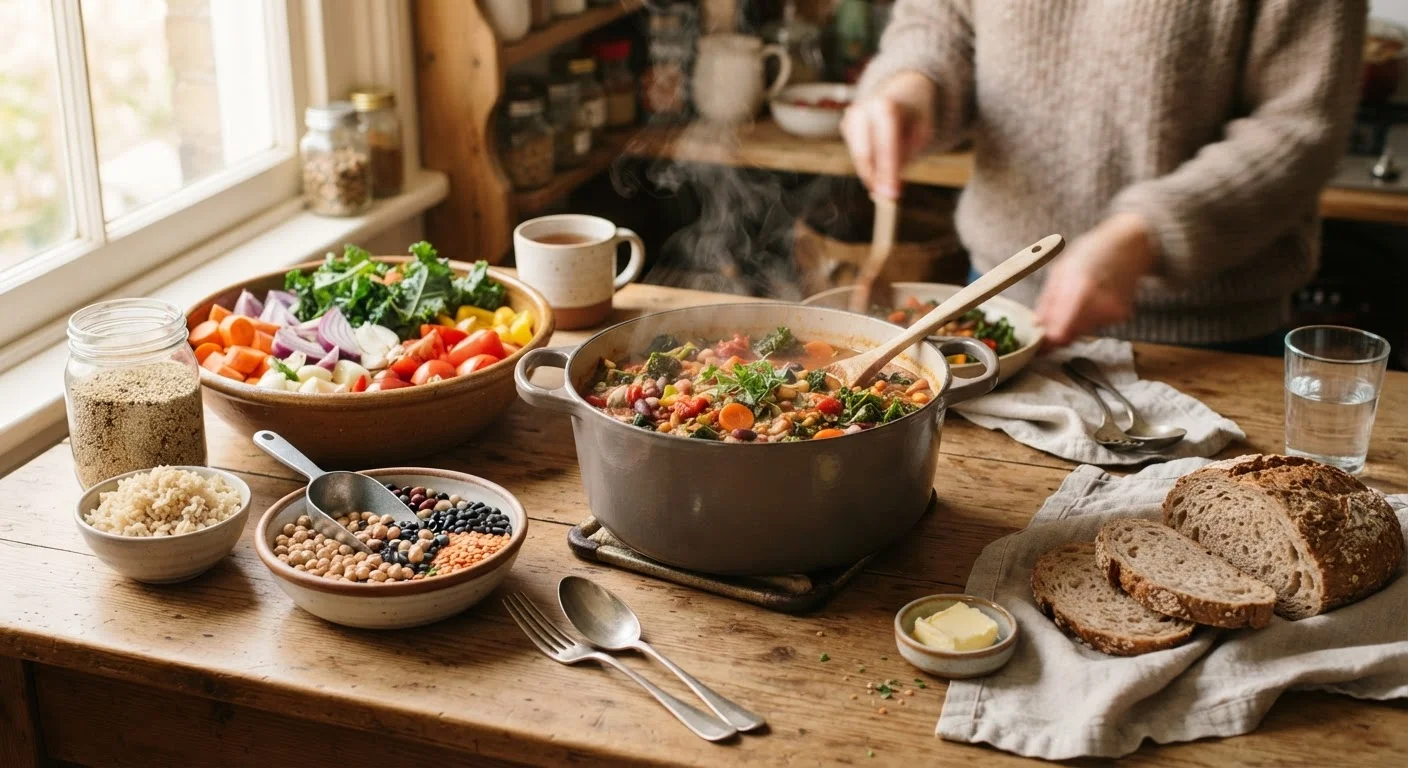
Photo: connectedsearches.com editorial
Key Takeaways
- Budget cooking does not mean bland food; many of the world's most flavorful cuisines rely on inexpensive staples.
- Affordable foods like beans, eggs, oats, and canned fish rank among the most nutrient-dense options at any grocery store.
- Cooking cheaply at home typically produces far better nutrition than comparably priced fast food.
- Meal planning and a stocked pantry, not higher spending, are what separate satisfying budget meals from disappointing ones.
- Cost-per-serving, not sticker price, is the practical measure of whether a meal is affordable.
Where the reputation comes from
The idea that cheap food is inferior food has a specific history. For much of the 20th century, heavily processed, low-cost convenience products were marketed as economical options, and their flavor and nutrition often reflected their production costs. TV dinners and shelf-stable "meat" products in the 1970s and 1980s gave budget eating a legitimate reputation problem. That association stuck even as the actual options available to frugal cooks changed substantially.
Today, the choice is not between cheap processed food and expensive whole food. Dried lentils, eggs, frozen vegetables, and whole grains are all inexpensive and unprocessed. The reputation lag persists because it is easier to remember a category stereotype than to update it.
It is also worth noting that some of the most respected food traditions globally, Mexican, South Asian, West African, Middle Eastern, were built on budget ingredients out of economic necessity, not in spite of it. Those cuisines are not considered inferior. The framing of cheap food as low-quality food is a cultural assumption, not a culinary fact.
The myths that keep families from cooking frugally
Several specific misconceptions stop families from cooking within a tight budget, even when they want to. The myths below are the ones that come up most consistently.
Myth
Cheap food is automatically bland and unappetizing.
Fact
Flavor comes from technique and seasoning, not ingredient cost. Many of the most celebrated dishes in global culinary tradition are built from inexpensive pantry items.
Rice and beans seasoned with aromatics, dried chiles, and a splash of acid taste nothing like the unseasoned version. Lentil soups from South Asian and Middle Eastern traditions use cumin, coriander, turmeric, and garlic to build deep flavor with minimal cost. A bag of dried spices, which typically runs under two dollars per variety, is what separates a forgettable dish from one people ask for again. The ingredients are cheap; the cooking is where the flavor lives.
Myth
Eating on a tight budget means poor nutrition.
Fact
Many of the most nutrient-dense foods available, including dried legumes, eggs, oats, frozen spinach, and canned fish, cost very little per serving.
Canned sardines and dried lentils both deliver protein, iron, and other micronutrients at a fraction of what premium cuts of meat cost. Frozen vegetables are harvested and frozen quickly, which preserves much of their nutritional content, and they cost less per cup than fresh in most seasons. The connection between tight budgets and good nutrition is well-documented in general dietary guidance: staple foods that cost little often supply exactly what a balanced diet needs.
Myth
Homemade budget meals take too long for busy families.
Fact
A large share of affordable recipes take 30 minutes or less, and batch cooking once or twice a week can cover most meals with minimal daily effort.
A pot of rice, a can of black beans, and whatever vegetable is on sale can come together in under 25 minutes. Sheet-pan dinners using cheap root vegetables and a protein like chicken thighs require roughly ten minutes of prep. Batch-cooked grains and proteins stored in the fridge cut weeknight assembly to near zero. The assumption that budget cooking is slow cooking is accurate for a narrow category of dishes like slow-braised beans from scratch, but not for the broader range of weeknight options available.
Myth
Cheap ingredients limit what you can cook.
Fact
Affordable pantry staples, including grains, legumes, canned tomatoes, and eggs, form the base of hundreds of distinct dishes across dozens of cuisines.
A bag of chickpeas alone can produce hummus, a curry, a soup, a roasted snack, or a grain bowl topping. Eggs work in fried rice, frittatas, shakshuka, breakfast burritos, and noodle dishes. The pantry staples that do the most work in budget cooking are versatile precisely because they absorb flavors rather than imposing one. The constraint is not the ingredient list; it is familiarity with what those ingredients can do.
Myth
Buying cheap food means wasting more because quality is lower.
Fact
Waste is driven by poor planning and storage habits, not by how much ingredients cost.
Dried beans and grains have a shelf life measured in years. Frozen produce does not spoil over a weekend. The foods most likely to be wasted, fresh herbs, bagged salad greens, and specialty produce, are also among the pricier items in many carts. A few well-intentioned frugal habits can quietly inflate costs when they lead to spoilage, but the solution is planning, not higher spending.
For a practical starting point on meeting your family's nutritional needs without overspending, see why everyday staples outperform expensive superfoods for nutrition. If you want a concrete weekly framework, the guide to feeding a family of four for under $100 a week walks through the actual planning process.
What actually determines whether budget cooking works
Nutrition does not require a premium price
The families who cook well on tight budgets tend to share a few habits. They think in cost per serving rather than total sticker price, so a $3 bag of lentils that feeds six people registers as cheaper than a $1.50 can of soup that feeds two. They keep a core pantry stocked with shelf-stable items, which means any given shopping trip only needs to fill in fresh components. They plan loosely, not rigidly, so a sale on chicken thighs or zucchini can shift the week's meals without disrupting anything.
None of those habits require culinary training or unusual discipline. They are adjustments to how grocery shopping is approached. The broader habits that help families stretch every dollar apply here too: a small amount of advance thinking prevents most of the situations where budget cooking actually does fall short.
The content provided on our blog site traverses numerous categories, offering readers valuable and practical information. Readers can use the editorial team’s research and data to gain more insights into their topics of interest. However, they are requested not to treat the articles as conclusive. The website team cannot be held responsible for differences in data or inaccuracies found across other platforms. Please also note that the site might also miss out on various schemes and offers available that the readers may find more beneficial than the ones we cover.