
Landscaping on a Tight Budget: Curb Appeal Without the Contractor Invoice

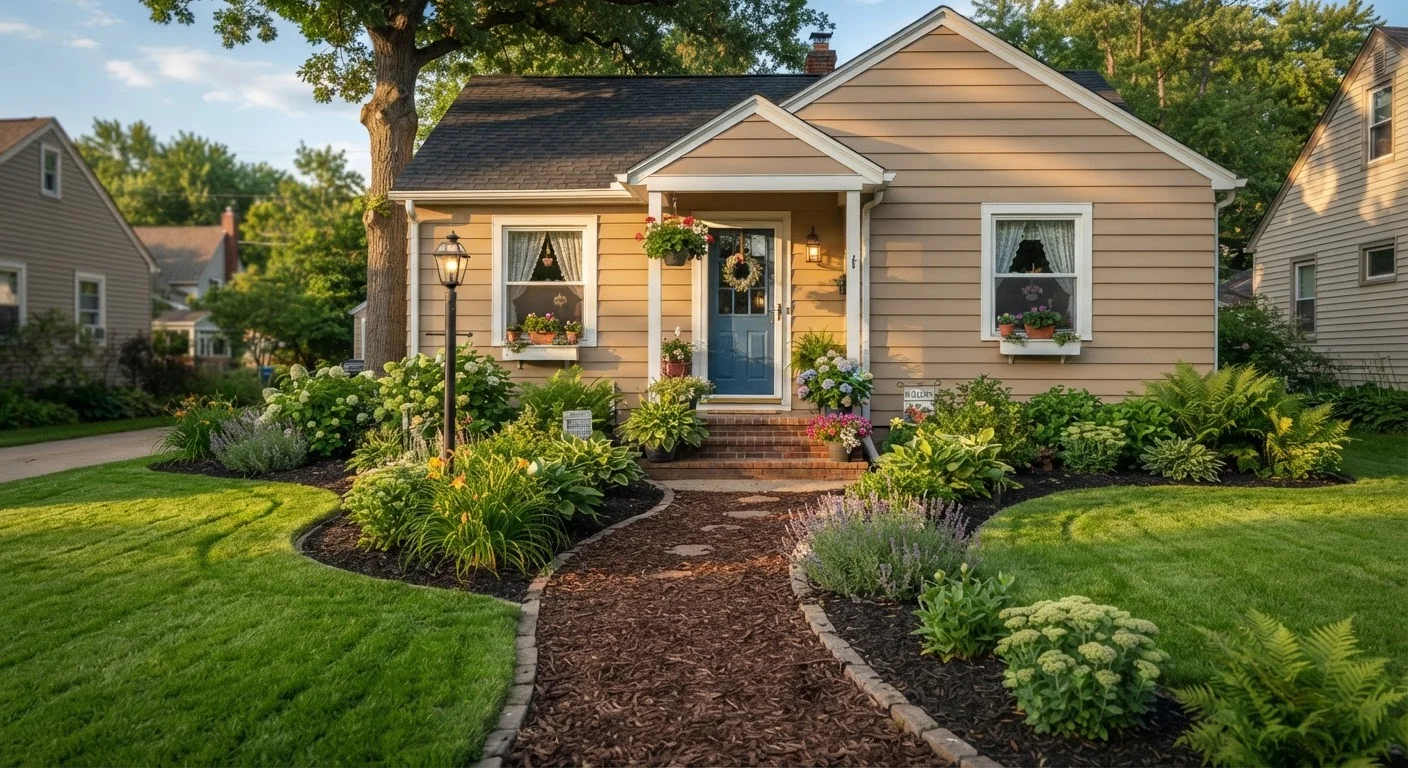
Photo: connectedsearches.com editorial
Key Takeaways
- Mulching beds suppresses weeds and retains moisture, cutting watering and weeding time significantly.
- Dividing existing perennials costs nothing and fills bare spots without buying new plants.
- Lawn edging takes under an hour but has an outsized effect on how maintained a yard looks.
- Native plants adapted to your region typically need less water, fertilizer, and replacement than exotic varieties.
- Renting tools for one-time tasks costs far less than buying equipment you will rarely use again.
Why curb appeal does not have to cost what contractors charge
Landscape companies in the U.S. charge anywhere from $50 to $100 per hour for labor, and a full front-yard redesign can run into several thousand dollars before a single plant goes in the ground. Most of that cost is labor, not materials. The tasks themselves are not technically difficult; they simply take time and a little planning.
The strategies below focus on work a homeowner with basic tools and a free afternoon can do. None of them require permits or professional licenses. For work that does cross into regulated territory, such as irrigation tapping into the main water line or grading that affects drainage toward a neighbor's property, check with your local municipality before starting. See our guide to DIY versus hiring a pro for a broader framework on where that line sits.
Start with what you already have
Eight ways to improve your yard without the contractor invoice
Edge your lawn before anything else
Clean, defined edges between lawn and beds or pavement give a yard a maintained look regardless of what else is happening. A manual rotary edger costs under $30 and handles most residential borders. A half-moon edging spade works just as well for curved beds. Run it along sidewalks, driveways, and the front edges of planting beds once in spring to establish the line, then touch it up monthly. The visual payoff relative to the time invested is hard to match with any other single task.
Clean edges do more for curb appeal than almost any other single yard task.
Mulch beds to reduce ongoing labor
A 2- to 3-inch layer of shredded bark or wood chip mulch suppresses weed germination, retains soil moisture, and makes beds look intentional. Bulk mulch ordered by the cubic yard from a local supplier typically costs 40 to 60 percent less per cubic yard than bagged mulch from a home improvement store. One cubic yard covers roughly 100 square feet at 3 inches deep. Apply mulch after pulling existing weeds and keep it a few inches away from plant stems and tree trunks to prevent rot. A single spring application usually holds through the season.
Bulk mulch from a local supplier costs far less per cubic yard than bagged store product.
Divide perennials to fill bare spots for free
Most herbaceous perennials, including daylilies, hostas, coneflowers, and ornamental grasses, benefit from division every three to four years. Dividing them in early spring or fall produces multiple plants from one, fills gaps in existing beds, and improves the health of the original clump. Dig up the root mass, separate it into sections with a sharp spade or garden fork, and replant immediately. Water well for the first two weeks. This costs nothing beyond your time and eliminates the need to purchase new plants for empty areas.
Dividing established perennials fills bare beds at zero plant cost.
Choose plants native to your region
Native plants are adapted to local soil conditions, rainfall patterns, and temperature ranges. Once established, they typically need less supplemental watering and little to no fertilizer compared with non-native ornamentals. Many also support local pollinators, which benefits vegetable gardens nearby. Your state's cooperative extension service maintains free plant lists organized by region and growing condition. Using that list as a starting point cuts down on plant losses and replacement costs over time.
Native plants cost less to maintain because they are already suited to local conditions.
Rent rather than buy specialty tools
Aerators, sod cutters, tillers, and stump grinders are tools most homeowners need once or twice, not regularly. Purchasing an aerator, for example, can run $300 to $600. Renting one for a half-day typically costs $50 to $80 at most equipment rental centers. Before any project, check whether a tool rental makes more financial sense than a purchase. Hardware stores and dedicated equipment rental businesses in most metro areas carry the common landscape tools. Factor in the cost of storage and maintenance when comparing buy versus rent.
Renting a tool you will use once beats owning one you store for years.
Overseed thin lawn areas instead of re-sodding
Sod costs roughly $0.30 to $0.80 per square foot plus installation, and large bare patches can add up quickly. Overseeding, spreading grass seed over thinned or bare areas after loosening the soil surface, costs a fraction of that. The key steps are removing dead material, scratching the soil to improve seed contact, applying seed at the rate on the bag label for your grass type, and keeping the area consistently moist for two to three weeks during germination. Results take longer than sod but the cost difference is substantial.
Overseeding bare patches costs a fraction of sod and works well with consistent watering.
Use gravel or decomposed granite in low-traffic dry areas
In areas where grass struggles, such as narrow side yards, spots under roof overhangs, or high-traffic paths, gravel or decomposed granite is a practical, low-maintenance surface. Lay a permeable landscape fabric underneath to limit weed breakthrough, then spread 2 to 3 inches of material on top. Decomposed granite compacts to a firm surface suitable for foot traffic. Both materials are available in bulk from landscape supply yards at prices far below pavers or concrete, and neither requires professional installation for straightforward applications.
Gravel solves problem areas where grass fails and costs less than hardscape alternatives.
Collect and reuse rainwater for irrigation
A rain barrel connected to a downspout collects runoff from the roof and stores it for garden use. Prices vary, but basic 50- to 55-gallon barrels are available at hardware stores and through many municipal water conservation programs, sometimes at a subsidized rate. Check with your local water utility before purchasing; some jurisdictions have restrictions on rainwater collection. Using stored rainwater on flower beds and vegetable gardens during dry spells reduces the water portion of utility bills without reducing plant health.
A rain barrel connected to a downspout provides free irrigation water during dry spells.
Keeping costs down over time
One-time improvements matter less than consistent, low-effort maintenance. A yard that gets attention for two hours each month stays presentable far more reliably than one that receives a large burst of work once a season. Building a simple seasonal checklist, spring edging and mulch refresh, summer watering and deadheading, fall leaf management and bed clean-up, keeps small problems from becoming expensive ones. For a realistic picture of what ongoing yard maintenance costs and where you can trim it, our home maintenance cost breakdown gives dollar-range context for common tasks.
The content provided on our blog site traverses numerous categories, offering readers valuable and practical information. Readers can use the editorial team’s research and data to gain more insights into their topics of interest. However, they are requested not to treat the articles as conclusive. The website team cannot be held responsible for differences in data or inaccuracies found across other platforms. Please also note that the site might also miss out on various schemes and offers available that the readers may find more beneficial than the ones we cover.