
Clearance, Closeout, and Open-Box: What Each Label Actually Means for Shoppers

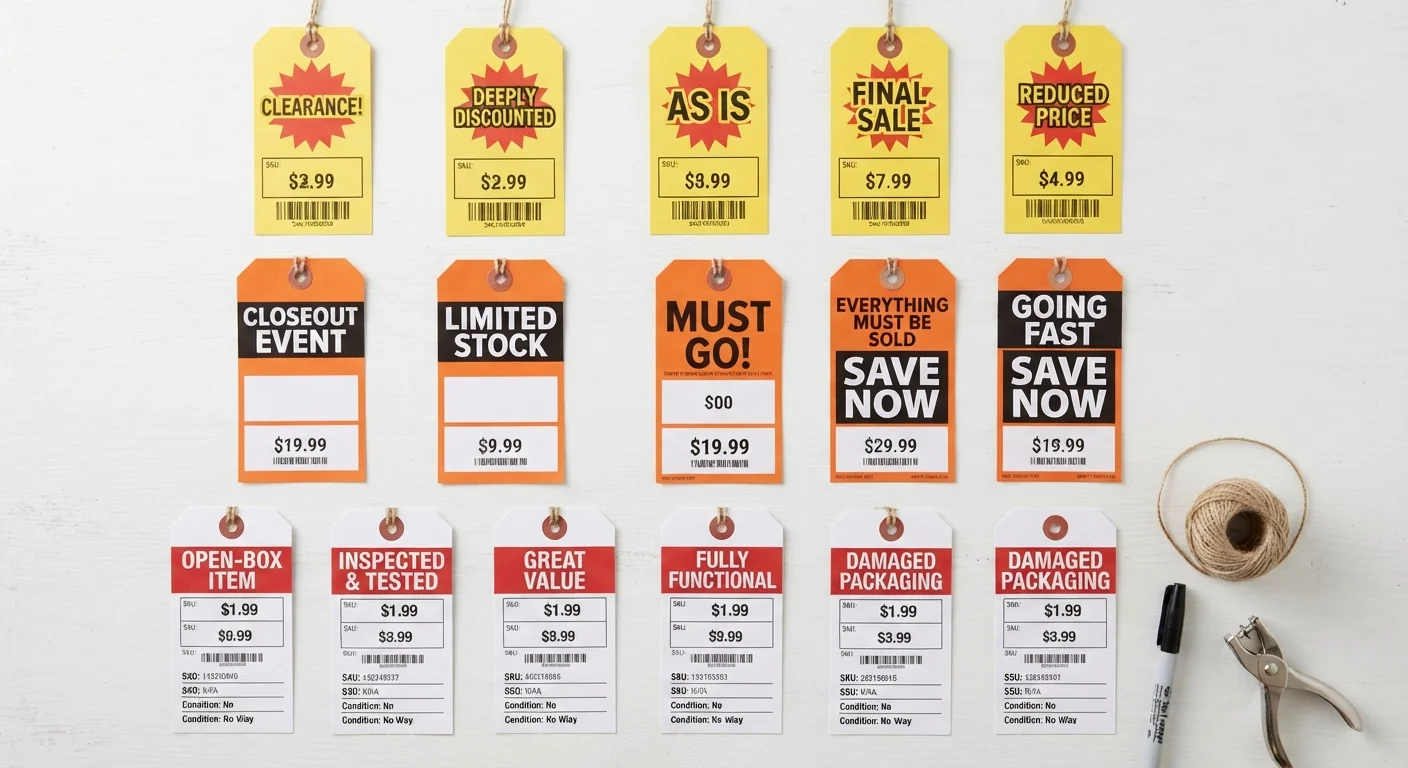
Photo: connectedsearches.com editorial
Why the label on a discount item actually matters
Retailers attach discount labels to items for different reasons, and those reasons affect how good the deal really is. A clearance tag does not mean the same thing as a closeout sticker or an open-box designation. Confusing them can lead to buying something with unexpected limitations, or passing up a genuinely strong value.
Understanding what each label signals about a product's condition, availability, and return eligibility gives you a clearer picture before committing your money. This is part of the broader reality that retail prices are built around strategy, and discount labels are no exception.
Clearance
Merchandise a retailer is discounting to clear out inventory, typically because of seasonal change, a store layout reset, or a product being dropped from that location's assortment. The product is usually new.
Closeout
A product that has been permanently discontinued by the manufacturer or retailer, with remaining units sold at reduced prices until stock is exhausted. No further inventory will be ordered.
Open-box
An item that was returned to a retailer after the original packaging was opened. Condition varies and depends on why it was returned and how the retailer graded it before resale.
Planogram reset
A scheduled reorganization of a store's shelf layout. Products removed during a reset are often moved to clearance regardless of their popularity or quality.
Condition grading
A scale retailers use to classify open-box or refurbished items by how much use or wear they show, such as like new, good, or acceptable. Grading standards differ by retailer.
Final sale
A purchase with no return or exchange option. Common on deeply discounted clearance and closeout items. The policy should be confirmed before buying.
Clearance: what it means and what to watch for
Clearance items are products a retailer is actively trying to remove from inventory. The most common reasons are seasonal turnover (think winter coats in March), a planogram reset where shelf space is reorganized, or a product being discontinued by that particular store. The item itself is typically new and unused.
Because clearance exists to move stock, prices can drop significantly over time. Retailers often re-mark clearance items multiple times, taking deeper cuts every few weeks until stock clears. Buying early in a clearance cycle means paying more; waiting longer risks the item selling out.
A few practical considerations: clearance return policies vary by retailer. Some stores offer the same return window as regular merchandise; others restrict it or mark the sale final. Checking the receipt or store policy before purchasing protects you from a one-way transaction.
Also, the fact that a product is on clearance at one store does not mean it is unavailable elsewhere. Another retailer may still carry it at standard price, or the manufacturer may sell it directly. It is worth confirming whether you actually need to act immediately.
Closeout: inventory that is gone for good
A closeout is a more permanent situation than clearance. The manufacturer, importer, or retailer has decided to stop carrying the product entirely, and the remaining units are sold at reduced prices to exhaust existing stock. Once it is gone, it is not being reordered.
Closeout merchandise is most common at warehouse stores, liquidators, and discount chains. The condition is almost always new and original packaging, but availability is finite by definition. If you want a closeout item, waiting typically means losing access to it.
The trade-off is the absence of ongoing support. A product discontinued by the manufacturer may have limited warranty coverage, and replacement parts, accessories, or compatible software may be harder to find over time. For consumables or simple durable goods, this is rarely a problem. For electronics or appliances with proprietary components, it is worth thinking through before buying.
Closeout pricing is often set by whoever is offloading the inventory rather than the original manufacturer, so there is no standardized discount depth. Some closeouts represent genuine savings; others are modest reductions on products that did not sell for a reason. Checking the original retail price through a price-history reference point helps calibrate whether the discount reflects real value.
Open-box: condition varies more than the label suggests
Open-box products have been returned to a retailer after the original packaging was opened. The return could stem from a customer change of mind, a gift duplicate, a minor defect that was since corrected, or damage during shipping. Retailers inspect returns, grade them, and resell them at a discount rather than returning them to the manufacturer.
The critical variable is condition grading. Open-box items are not uniform. A returned television that was plugged in once and returned the next day differs substantially from one that was used for a month before being brought back. Some retailers apply detailed grading scales (such as "like new," "good," or "fair") with written condition notes. Others use vaguer labels. Asking specifically about what was tested, what parts are included, and whether the original warranty transfers is worthwhile before purchase.
Return policy is particularly important with open-box items. Many retailers offer a shorter return window on open-box merchandise, sometimes seven days versus the standard thirty. Confirm this before buying.
Open-box purchases can make sense for appliances, electronics, and furniture where a modest discount on a lightly used item reflects good value, especially when the retailer has inspected and documented the item's condition. For items where hygiene matters, such as certain personal care products or infant equipment, extra scrutiny is appropriate.
If you are new to evaluating these kinds of purchases, the deal-smart shopping primer for families covers the foundational habits that make this kind of evaluation easier over time.
Comparing the three labels at a glance
Each label reflects a different underlying situation. Clearance means the retailer wants the product gone. Closeout means the product is being permanently discontinued in that channel. Open-box means the product has been previously opened or returned and may have been used.
| Typical condition | Clearance: new. Closeout: new. Open-box: previously opened, varies. |
| Future availability | Clearance: limited stock. Closeout: none once sold. Open-box: depends on returns. |
| Manufacturer warranty | Usually intact for clearance and closeout; may be partial or absent for open-box. |
| Return policy risk | Higher for all three categories; final-sale terms are common. |
| Main buyer risk | Clearance: timing. Closeout: no parts or support later. Open-box: undisclosed condition. |
Warranty status deserves particular attention. Clearance and closeout items typically carry the manufacturer's original warranty, since the product is new. Open-box items may carry a partial or modified warranty depending on the retailer's policy and how long ago the product was first sold. Products sold through third-party liquidators on closeout may have no manufacturer support at all.
None of these labels automatically means a purchase is a good idea or a poor one. The value depends on the specific product, its condition, the return policy, and whether you actually need it. Loyalty program member pricing sometimes stacks with clearance or closeout discounts, which can affect total cost if you are already enrolled.
The content provided on our blog site traverses numerous categories, offering readers valuable and practical information. Readers can use the editorial team’s research and data to gain more insights into their topics of interest. However, they are requested not to treat the articles as conclusive. The website team cannot be held responsible for differences in data or inaccuracies found across other platforms. Please also note that the site might also miss out on various schemes and offers available that the readers may find more beneficial than the ones we cover.