
Insulation Types Compared: What Makes Sense for a DIY Retrofit

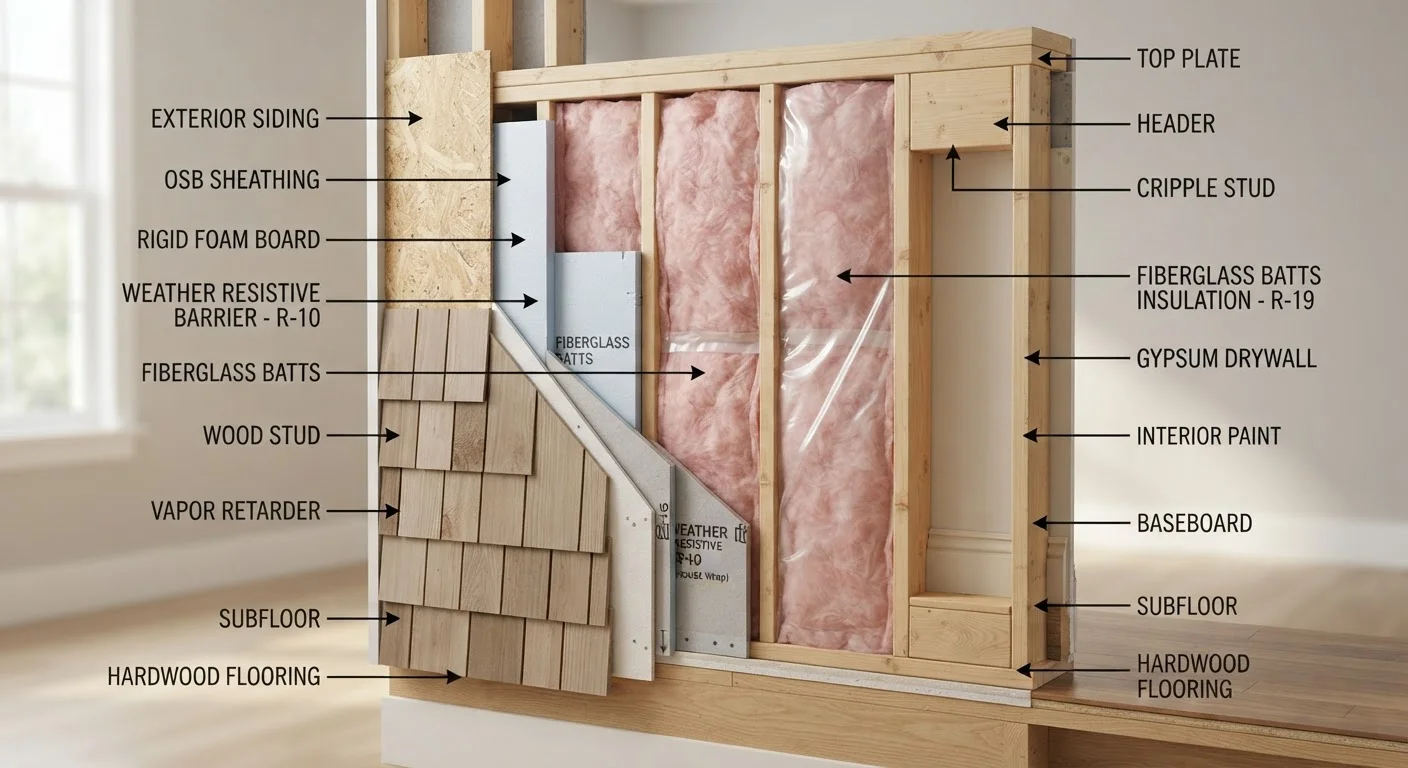
Photo: connectedsearches.com editorial
Key Takeaways
- Batt insulation is the most DIY-friendly option for open wall cavities and attic floors.
- Blown-in insulation reaches tight spots that batts cannot, but typically requires rented equipment.
- Rigid foam works well for basement walls and exterior sheathing, though cutting and sealing takes care.
- The right choice depends on the space being insulated, your existing R-value, and your comfort level with tools.
- Air sealing before adding insulation often improves energy performance more than insulation alone.
Why the insulation type matters before you buy anything
Adding insulation without first understanding which type fits your space can mean wasted money and underperformance. Each material has a different R-value per inch (R-value measures thermal resistance: a higher number means better resistance to heat flow), a different installation method, and a different set of spaces where it works well. Before purchasing materials, identify the specific area you plan to insulate, measure the cavity depth or available space, and check your local building code for the minimum required R-value in your climate zone. The U.S. Department of Energy publishes climate zone maps and recommended R-values by region.
Sealing air leaks around windows, doors, and penetrations before adding insulation is worth doing first. Insulation slows heat transfer through materials; it does not stop air moving through gaps. Doing both in sequence tends to produce better results than insulation alone.
Batt insulation: the standard for open cavities
Fiberglass and mineral wool batts come pre-cut to fit standard 16-inch or 24-inch stud spacing. They are available in varying thicknesses that correspond to R-11 through R-38, making them practical for wall cavities, attic floors between joists, and floors above unheated crawl spaces. Batts are the most accessible option for homeowners who have never insulated before: you cut them with a utility knife, press them into the framing, and secure a kraft-paper facing with a staple gun if the product includes one.
The main limitation is fit. If your framing is irregular, if there are lots of obstructions (pipes, wires, blocking), or if the cavity has already been partially filled, batts leave gaps that reduce their effective performance. Compression also matters: stuffing a thicker batt into a shallow cavity reduces its R-value below what the label states.
Mineral wool batts cost more per square foot than fiberglass but resist moisture better and are less irritating to handle. Both types require a dust mask, safety glasses, and gloves during installation. Neither should be left exposed in a living space without a fire-code-approved covering such as drywall.
| Batt | Blown-in | Rigid foam | |
|---|---|---|---|
| DIY difficulty | Low | Moderate | Moderate |
| Best location | Open wall or floor cavities | Attics, closed wall cavities | Basements, rim joists, exterior walls |
| R-value per inch (approx.) | R-3.1 to R-4.3 | R-2.2 to R-3.8 | R-3.8 to R-6.5 |
| Moisture resistance | Low (fiberglass) to moderate (mineral wool) | Low to moderate | High (especially XPS) |
| Equipment needed | Utility knife, staple gun | Blower machine (rentable) | Utility knife or saw, tape |
| Fire code covering required | Yes, in living spaces | Yes, in living spaces | Yes, always |
Blown-in insulation: best for coverage and hard-to-reach spots
Blown-in insulation (loose-fill cellulose or fiberglass) is installed using a blower machine that feeds material through a hose. It conforms to irregular shapes, fills around obstructions, and works well for attic floors where you need to increase depth quickly. Many home improvement retailers rent blower machines when you purchase a qualifying amount of bags, which can lower the equipment cost considerably.
Cellulose is made from recycled paper treated with fire retardant. It settles over time, so installers typically blow it in thicker than the finished target depth. Loose-fill fiberglass settles less but costs more and offers a slightly lower R-value per inch than cellulose at the same installed depth.
Retrofitting existing closed wall cavities with blown-in material requires drilling small holes in the wall surface, inserting the hose, filling each cavity, and patching the holes afterward. This is doable for a careful DIYer but involves more steps than open-cavity batt work. If you are not comfortable patching drywall or siding, a contractor is worth considering for this specific task.
Rigid foam board: moisture resistance and thin profiles
Rigid foam boards come in three main types: expanded polystyrene (EPS), extruded polystyrene (XPS), and polyisocyanurate (polyiso). R-values range from about R-3.8 per inch for EPS up to R-6.5 per inch for polyiso, which makes rigid foam useful where space is limited but performance requirements are high.
Common retrofit uses include covering basement walls before framing, adding continuous insulation over exterior wall sheathing, and insulating the rim joist area (the framing at the top of a foundation wall). Cutting rigid foam requires a utility knife or circular saw and produces dust, so a dust mask is important. Sealing the edges and seams with foam-compatible tape or canned spray foam is necessary: gaps undermine the material's performance.
XPS has the highest moisture resistance of the three, which is why it is commonly used below grade or in crawl spaces. However, XPS uses a blowing agent with a higher global warming potential than EPS or polyiso, a factor some homeowners weigh. All three foam types are combustible and must be covered with a thermal barrier such as drywall when installed in occupied spaces. This is a fire code requirement, not a suggestion.
Check local permit requirements before starting
Comparing the three across practical criteria
The table below summarizes how batt, blown-in, and rigid foam compare across the factors that matter most for a DIY retrofit. Use it as a starting reference, then verify local code requirements and product specifications before purchasing.
R-49 to R-60
Recommended attic R-value in colder U.S. climate zones
The U.S. Department of Energy recommends R-49 to R-60 for uninsulated attics in zones 6 and 7 (northern states).
15%
Estimated heating and cooling savings from air sealing and insulation
The U.S. Environmental Protection Agency's ENERGY STAR program estimates that air sealing combined with proper insulation can reduce heating and cooling costs by around 15%.
Whichever material you choose, measure twice and account for the full area including corners and irregular sections. Buying slightly more than your calculation requires is generally less costly than a second trip for a small amount. Check the product's coverage chart, which states how many square feet a bag or roll covers at a given thickness and R-value.
The content provided on our blog site traverses numerous categories, offering readers valuable and practical information. Readers can use the editorial team’s research and data to gain more insights into their topics of interest. However, they are requested not to treat the articles as conclusive. The website team cannot be held responsible for differences in data or inaccuracies found across other platforms. Please also note that the site might also miss out on various schemes and offers available that the readers may find more beneficial than the ones we cover.