
Outdoor Activity as a Health Strategy for Families

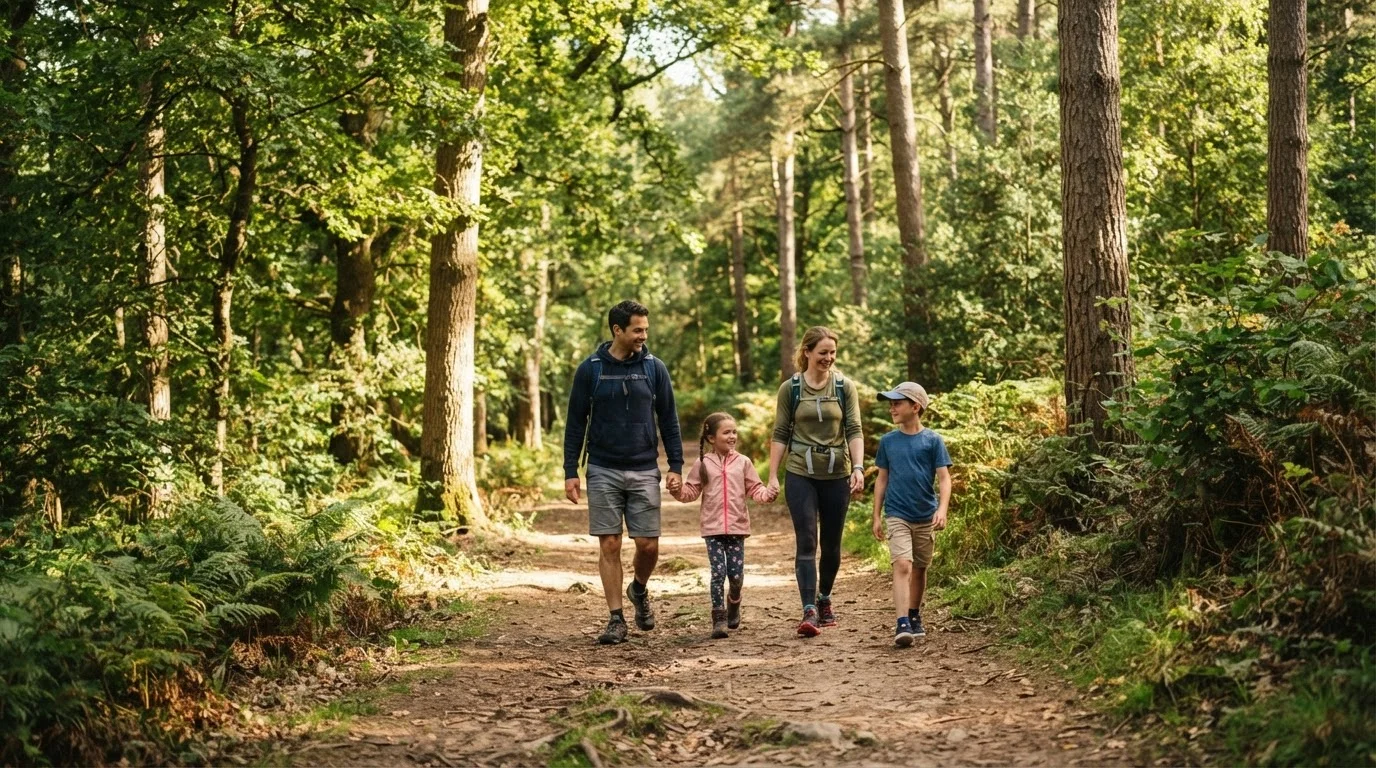
Photo: connectedsearches.com editorial
Key Takeaways
- Regular outdoor activity supports cardiovascular health, mood, and sleep without requiring gym memberships.
- Parks, trails, and backyards are free or low-cost venues that work for most families.
- Consistent movement habits built early in childhood tend to carry into adult life.
- Combining outdoor time with social connection amplifies mental health benefits for all ages.
- Short, frequent outdoor sessions can be as useful as longer, less frequent ones.
Why outdoor activity matters for family health
Physical activity does not require a gym membership, specialized equipment, or a structured program. Outdoor spaces, many of them free, provide enough variety to support cardiovascular health, muscle development, stress reduction, and better sleep across age groups. The practical value of this is real: consistent movement can reduce the likelihood of some chronic conditions over time, which has implications for both health and household finances. The connection between daily preventive habits and long-term health costs is a useful frame for thinking about why these routines are worth building.
The following approaches work for most families and cost little or nothing to start.
Walking as a foundation habit
Walking is free, requires no equipment, and scales to almost any fitness level. A 30-minute walk most days of the week contributes to cardiovascular health, weight management, and blood sugar regulation, according to general guidance from public health bodies. For families, a daily neighborhood walk after dinner also builds routine without scheduling pressure.
Start small if the habit is new. Even 10-minute walks repeated two or three times a day accumulate meaningful movement over a week. Sidewalks, school tracks, and local parks are all usable surfaces at no cost.
Walking costs nothing and builds a sustainable movement habit the whole family can share.
Unstructured play in outdoor spaces
Children's physical development benefits from unstructured outdoor play: running, climbing, balancing, and exploring without a fixed agenda. Public playgrounds, grassy fields, and wooded areas all provide this at no charge. Unstructured play also builds coordination and problem-solving in ways that organized sports do not always replicate.
Parents do not need to direct this time. Giving children 30 to 60 minutes of open outdoor time several times a week can be enough to see benefits in attention, mood, and sleep quality, though individual results vary. Outdoor play also tends to reduce screen time naturally.
Unstructured play outside supports coordination and attention without any equipment or cost.
Nature exposure and mental health
Time in natural settings, even brief visits to a park or a tree-lined street, is associated in research literature with lower reported stress and improved mood. The mechanisms are not fully established, but the pattern appears across multiple study populations. For adults managing work-related stress and children managing school pressure, a short outdoor break can help reset focus.
This does not require wilderness access. Urban green spaces, community gardens, and backyard gardens all provide some degree of nature contact. The effect appears to depend more on regularity than on the size or remoteness of the outdoor space.
Regular contact with natural settings, even small urban green spaces, can reduce stress.
Cycling as a family activity
Cycling builds aerobic fitness and leg strength for children and adults alike. Many families already own bicycles, and local trails or low-traffic roads provide safe riding routes. Libraries in some areas lend bikes or helmets; community programs occasionally offer low-cost access as well.
Safety matters: helmets are important regardless of rider age or trip distance. Choosing routes with separated bike lanes or low vehicle traffic reduces risk substantially. Starting with short, flat routes builds confidence before longer rides.
Cycling on local trails builds fitness for every family member with equipment many households already own.
Gardening as light activity
Gardening involves sustained low-intensity movement: digging, planting, weeding, and carrying. For older adults and children alike, it provides gentle exercise that improves grip strength, flexibility, and coordination. Community garden plots are available in many cities at low or no cost for residents who lack yard space.
Growing food also has a secondary practical benefit. Vegetables grown at home can reduce grocery spending on fresh produce, which connects physical activity to household budget goals. The relationship between daily wellness habits and long-term household costs is worth considering when building any routine.
Gardening combines light physical activity with the practical payoff of growing food at home.
Using public trails and recreation areas
The United States has an extensive network of free public trails, national forests, state parks, and municipal recreation areas. Many charge no entry fee at all; some national parks offer free admission on designated days throughout the year. Hiking on these trails provides aerobic exercise, exposure to natural terrain, and a change of environment that supports mental health.
Trail finder tools from public land agencies help families identify routes suited to their fitness level and travel distance. Starting with shorter, well-marked trails reduces the chance of a difficult or unsafe experience. Bringing water, wearing appropriate footwear, and telling someone your planned route are basic precautions worth taking.
Public trails and recreation areas provide free terrain for aerobic exercise and mental reset.
Building outdoor habits that stick
Consistency matters more than intensity. Families who tie outdoor time to an existing routine, such as a Saturday morning walk before errands, or an after-school outdoor session before homework, tend to maintain the habit longer than those who schedule it as a standalone event.
Involving children in choosing the activity increases buy-in. Rotating between walking, cycling, playground time, and gardening prevents boredom. The broader habit of building low-cost routines into family life applies here: small, repeated actions compound over time in ways that occasional big efforts do not.
This article is for general informational purposes only and is not medical advice. Consult a qualified healthcare professional before making changes to your or your family's physical activity routine, especially if any family member has an existing health condition.
Tying outdoor time to an existing routine is one of the most reliable ways to sustain the habit.
Getting started without overthinking it
The barrier to outdoor activity is rarely financial. It is more often inertia, competing demands on time, or uncertainty about what counts as enough. Most families can start with what is already within walking distance and adjust from there.
Access and safety considerations
For families working to stretch every dollar while building healthier routines, outdoor activity fits naturally into the broader goal of making household habits more sustainable. The cost is mostly time, and the returns tend to show up in energy, mood, and health over months rather than days.
The content provided on our blog site traverses numerous categories, offering readers valuable and practical information. Readers can use the editorial team’s research and data to gain more insights into their topics of interest. However, they are requested not to treat the articles as conclusive. The website team cannot be held responsible for differences in data or inaccuracies found across other platforms. Please also note that the site might also miss out on various schemes and offers available that the readers may find more beneficial than the ones we cover.