
Generic vs. Name-Brand Vitamins and Supplements: What to Know

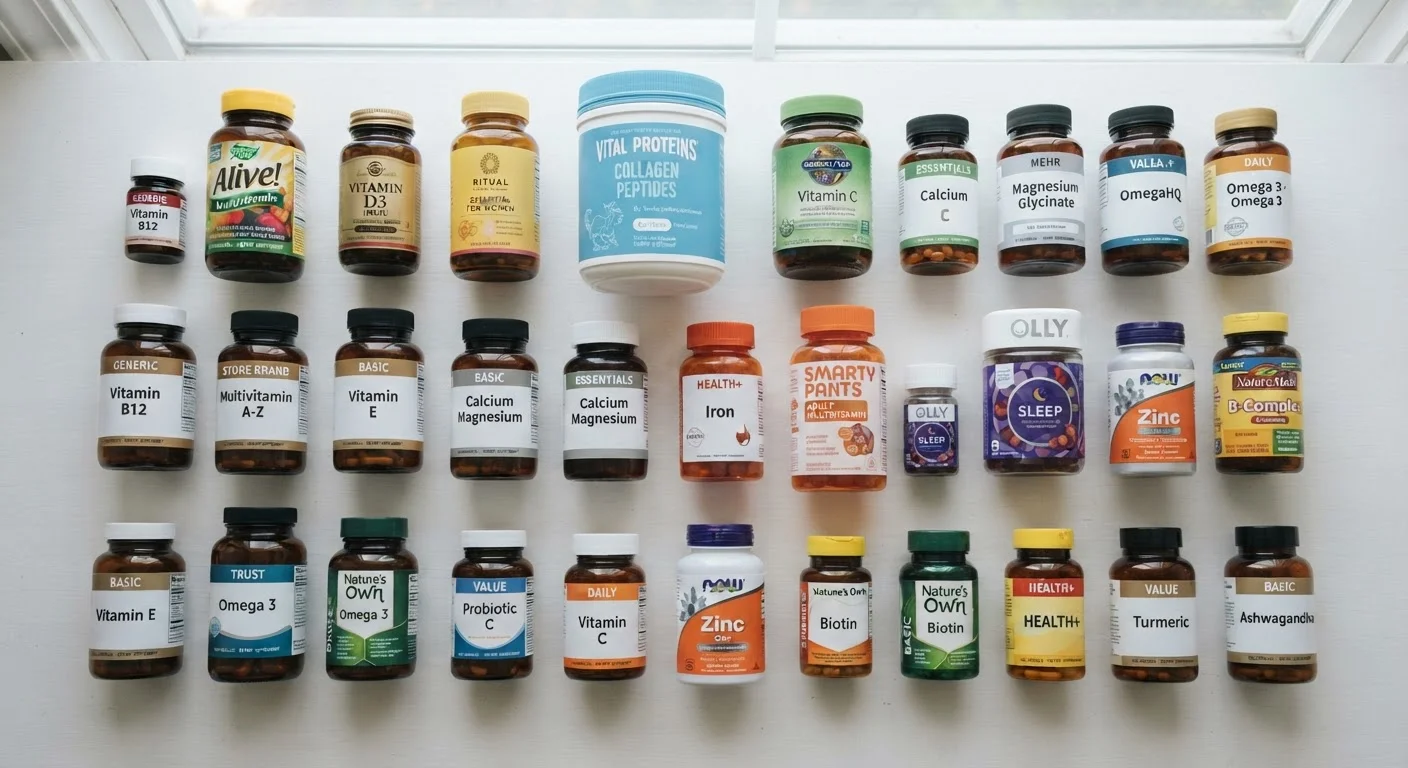
Photo: connectedsearches.com editorial
Key Takeaways
- Active ingredient identity, not label prestige, determines whether a supplement does what it claims.
- Third-party certification from organizations like USP or NSF is a more reliable quality signal than brand recognition alone.
- Generic supplements can cost 20 to 70 percent less than name-brand equivalents with comparable formulations.
- Bioavailability and ingredient form matter more than price tier for certain nutrients, such as magnesium and folate.
- No supplement replaces a varied diet; consult a healthcare provider before starting any new supplement regimen.
What actually separates a generic supplement from a name brand
The main difference between a generic and a name-brand supplement is marketing, packaging, and price. The active ingredients in a generic vitamin C tablet and a name-brand vitamin C tablet are chemically identical when both list the same compound at the same dose. Manufacturers of name-brand products spend heavily on advertising, shelf presence, and branded packaging, and those costs are passed along to consumers.
That said, "generic" is not a synonym for "identical." Formulations can differ in ways that matter. A store-brand calcium supplement might use calcium carbonate while a name-brand version uses calcium citrate. Calcium citrate absorbs more readily with or without food, while calcium carbonate requires stomach acid and is best taken with meals. The label tells you which form you are getting, so reading it closely is worth the extra minute.
For common, well-researched nutrients, the ingredient form is usually standardized across both tiers. Vitamin D3 (cholecalciferol) is vitamin D3 whether it comes in a store-brand bottle or a premium one. The same applies to zinc gluconate, vitamin B12 as cyanocobalamin, and most basic minerals. For a broader look at where generic labels deliver genuine value across product categories, see store brands vs. name brands.
How to evaluate supplement quality without relying on price
Price is a poor proxy for quality in the supplement aisle. The U.S. Food and Drug Administration regulates supplements as food, not as drugs, which means manufacturers are not required to prove safety or efficacy before selling. This applies equally to generics and name brands.
Third-party certification programs fill part of that gap. Organizations such as USP (United States Pharmacopeia), NSF International, and ConsumerLab independently test supplements and verify that what is on the label is actually in the bottle at the stated dose, with no harmful contaminants. A generic supplement with a USP Verified mark is a more trustworthy purchase than a name-brand product without any third-party verification.
| Criterion | Generic supplements | Name-brand supplements |
|---|---|---|
| Typical cost | 20-70% lower per serving | Higher due to marketing costs |
| Active ingredient identity | Identical when same form listed | Identical when same form listed |
| Third-party certification | Available on some products | Available on some products |
| Specialty formulations | Limited selection | Broader range available |
| Label transparency | Varies by retailer | Varies by brand |
| Packaging and marketing | Minimal | Extensive |
When no third-party seal is present, look at the Supplement Facts panel directly. Compare the ingredient form, dose, and any added fillers or allergens. If two products list identical ingredients at identical doses, the generic version is functionally equivalent for most healthy adults. A healthcare provider can help you determine whether a specific form of a nutrient matters for your situation.
This article provides general health information only and is not a substitute for advice from a qualified healthcare professional. Consult a doctor, pharmacist, or registered dietitian before starting any new supplement.
When the price gap is worth paying attention to
Generic supplements typically cost 20 to 70 percent less than comparable name-brand products, according to general retail pricing patterns. For a household buying several supplements regularly, that gap adds up. A family spending $40 a month on name-brand vitamins might spend $15 to $25 for store-brand equivalents with the same nutrient profiles.
20-70%
Typical savings on generic vs. name-brand vitamins
General retail pricing comparisons show store-brand supplements consistently priced lower than name-brand equivalents with the same listed ingredients.
~80%
Americans who use dietary supplements
The Council for Responsible Nutrition has reported that roughly 8 in 10 American adults use dietary supplements of some kind.
3 main
Third-party certification bodies recognized in the U.S.
USP, NSF International, and ConsumerLab are the most widely recognized independent organizations that verify supplement label accuracy and purity.
The savings calculation changes when specialty ingredients are involved. Omega-3 fish oil varies widely in EPA and DHA content, the two fatty acids with the most evidence behind them. Some generic fish oil products contain lower combined EPA and DHA per softgel than name-brand versions at a similar serving size. Comparing milligrams of EPA and DHA per dose, rather than just the number of softgels or the price per bottle, gives a more accurate picture of value.
Probiotics present a similar challenge. Strain identity (listed as a specific genus, species, and ideally a strain number) and colony-forming units (CFUs) at the time of expiration, rather than at manufacture, are what determine whether a probiotic product is likely to work. Generic probiotic labels that include this information are worth considering; those that omit it are harder to evaluate regardless of price. For more on stretching a household budget across grocery and health purchases, the smart grocery savings hub covers practical approaches.
Practical steps for making a smart choice
Start with the Supplement Facts label. Write down the ingredient name and form (for example, "magnesium glycinate" vs. "magnesium oxide"), the dose per serving, and the number of servings in the container. Then compare the cost per serving, not per bottle, across generic and name-brand options.
Check for third-party verification seals before making a final choice. USP, NSF, and Informed Sport seals are the most recognized in the U.S. market. If a generic carries one of these seals and a name brand does not, that is a meaningful quality distinction in favor of the generic.
For basic vitamins and minerals with well-established forms, a generic product that passes a label comparison will generally serve most healthy adults as well as a name-brand equivalent. For specialized supplements, high-dose formulations, or products intended for pregnancy, children, or people managing chronic conditions, a pharmacist or registered dietitian can help identify whether a specific form or certification matters. The broader principles that apply to evaluating price versus quality in grocery and household shopping are covered in a family-friendly shopping primer.
The content provided on our blog site traverses numerous categories, offering readers valuable and practical information. Readers can use the editorial team’s research and data to gain more insights into their topics of interest. However, they are requested not to treat the articles as conclusive. The website team cannot be held responsible for differences in data or inaccuracies found across other platforms. Please also note that the site might also miss out on various schemes and offers available that the readers may find more beneficial than the ones we cover.